I was thinking about the difference between good amps and ordinary amps.
The main difference with amps lies in the nature of the core technology they are based on: tubes or transistors
I don't want to give a lecture in basic electronics (TL;DR), so I just list some points need to be respected:
price, availability, delicary, working voltage (which alone brings several additional aspects), size, weight, time to be ready
But looking at sound quality only there is a major difference between those both: the amplifying graph of tubes is linear, the one of transistors exponential. With transistors the size of amplifications depends on the frequency, while with tubes all frequencies are amplified with same quantity. Transistors produce an unavoidable distortion, tubes don't. Of course there are ways to keep this distortion as small as possible, and in most cases in real life they are not hearable, or don't carry weight. But when we want to dig the difference between 97% and 99% this is one aspect.
Before you dump your transistor amps, storm into your next radio-shack, and spend a lot of money on tube amps:
Just using tubes ain't no guarantee for having a better amp than with transistors. There are more aspects than just this solitary point.
Sound systems are another good example for a large industry producing and selling a many lots of equipment just to show off with, where many people read about, what's best, and buy expensive stuff just to have an idea, an imaginated feeling satisfied, while actually they cannot really hear any difference at all.

In the 1970s it was the size of amps, and avove all the boxes couldn't be large enough. Some stereo systems were sheer temples which impress by their size only. It was like with car's engines in those days: "Volumetric displacement is everything." (I love the scene in the movie "Ruthless People" (USA 1986), where the kidnapper sells speakers.

)
I am still astonished when I listen to today's speakers what volume and high quality those tiny little bastards produce. Even the ones you can get for a few bucks. Back in the 1980s unthinkable. With transistors.

But that's also just one aspect in a large chain, as
hruodr already pointed out:
That is not the amplifier, but the whole system, mainly speakers and amplifier together.
Not only that. It all starts with the quality of the recording: The acoustics of the room, the quality the musicians played that day, the quality of the recording system (microphone, wires (or bandwidth of any radio signal), amps,...), the work of the sound technician, the way it's saved to and the medium you play later (high quality vinyl, low quality vinyl, CD, BD, mp3, ogg... high compression, low compression...) and the the whole shebang of your equipment on what you play it, its quality, the acoustics of your room, and last but not least what you actually can hear.
Above all you need to see the fact: Even with the best equipment you cannot add missing information. What's lost e.g. while reducing data to save it, is lost. And stays lost. Even AI can only anticipate, guess the missing parts. This may be done convincing well, but it can never reproduce the genuine original containing all information recorded. Nothing can. What's lost, is lost, and stays lost.
As I hinted above:
The world is full of people who spend lots of money on buying expensive wine, while they cannot actually tell a Bordeaux from a Beaujolais.
Lots of money is made with this. In sports equipment, cars, wine, food & restaurants, tools,..., and stereo systems.

 I expect they are pretty good though!
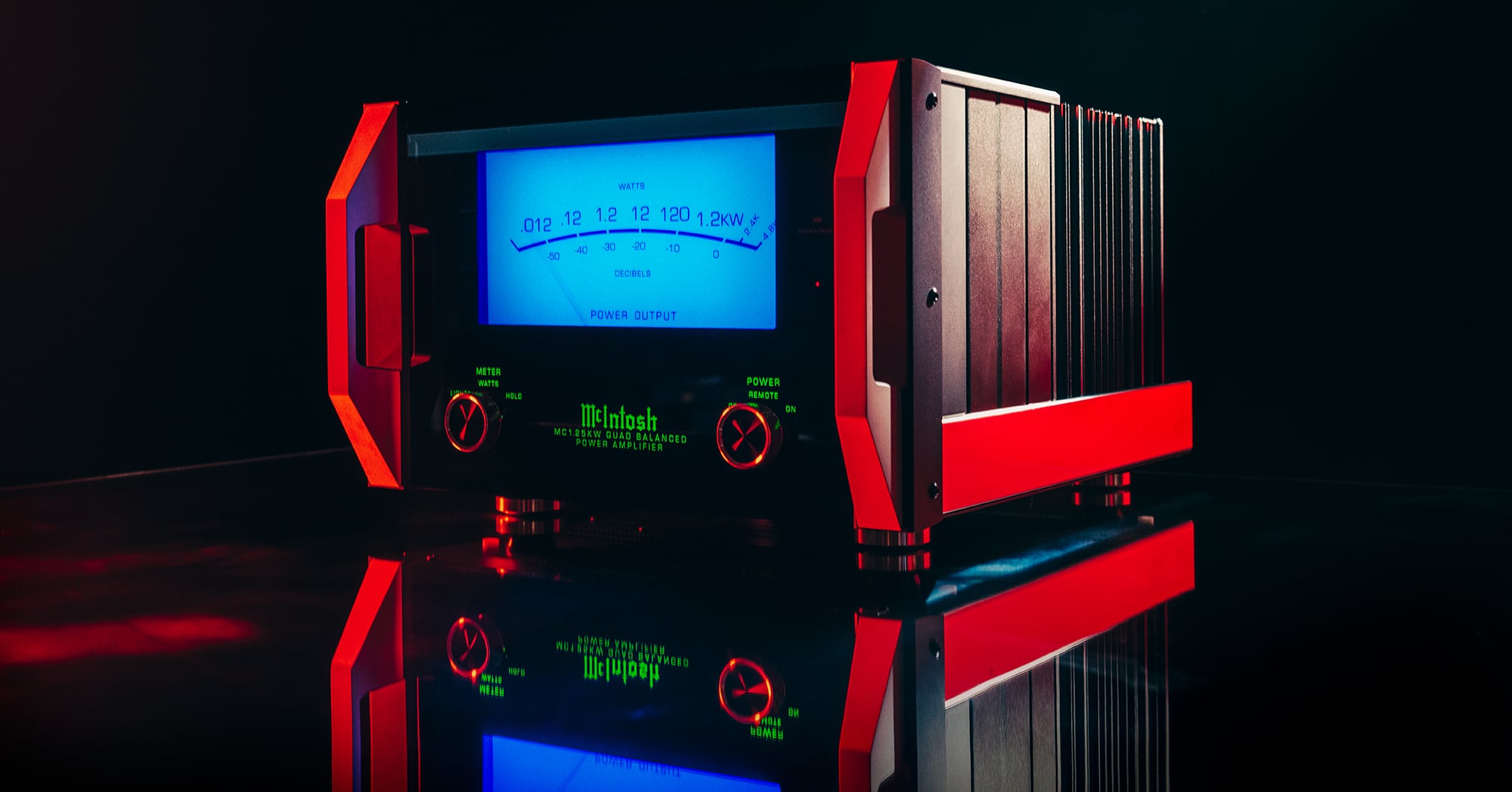
 www.mcintoshlabs.com

 yorkshireav.co.uk




