People have forgotten what "audio quality" is

Live music is a 3D signal. What you "sample" is based on where you are in relation to the players & speakers, the direction you're facing, ambient factors such as the people around you, light, smells, heat, humidity etc. Even turning your head can change the sample. Close to impossible to simulate that sort of signal with high fidelity such that you feel it is live!

If you played with 3D graphics monitors where you use differently polarized glasses such that each eye sees a slightly different picture and your brain constructs a stereoscopic image, you will notice that if you move your head a lot after a while you will get a headache. That is because the constructed stereoscopic image is static and doesn't match your brain's expectation when you are moving your head watching an actual view (as your eyes "sample" a slightly different snapshot of the 3D light signal). I suspect what happens with stereo audio signals a similar phenomenon. Even when you listen to track meant for 7 speakers you can't quite get the same liveness. In other worlds, no matter how many bits of accuracy and how high a sampling frequency you use, you are only capturing a slice of the live sound.
 
I was thinking about the difference between good amps and ordinary amps. The good ones are the ones where you listen to something you already heard 20 times and hear new instruments in it, where you can suddenly hear some of the words of the song properly for the first time, etc. The equivalent in optics is when you get a good paif of binocs and adjust the focus just right. Whereas with a cheap pair you can never get the focus sharp no matter how hard you try adjusting them. Your brain recognises when it's sharply in focus, its almost a subconcious process. It's not just focus and resolution, it's also ability to convey emotion, what some people have called 'musicality'. This is where I depart from the Doug Self and ASR approach, which is scientific and based on performance measurements.

I remember the first time I heard a good amp, it was an original Naim Nait which is a little otherwise unspectacular 10 watt per channel transistor amp, many years ago. Over the years I have found a small number of amps that have a magic sound while most are more ordinary and don't resolve as well. Some of the good ones are transistor, some are valve, some expensive and some not so expensive. Some have very good measurements, others don't. The Mk 1 AI 300 I'm currently listening to is another good one, although I'm sure the distortion figures are nothing special. It seems to have little to do with output power, a 10W amp can sound much better than a 100W one. Someone once said anyone can make an amplifier loud, the difficult trick is to make it sing. The only way you can really tell is by listening to them.
 
The good ones are the ones where you listen to something you already heard 20 times and hear new instruments in it, where you can suddenly hear the words of the song properly for the first time, etc.
That is not the amplifier, but the whole system, mainly speakers and amplifier together.

As said, my final decision for the Canadian speakers against the British ones was just because
of the sound of the cord of a cembalo.
 
I used to think that, but not now. I have done listening tests where the rest of the system stays the same and I just swap out amplifiers, and get a big difference in audio quality, with the same speakers, same source, same music etc. Your ears and brain recognise when you've got a good one. Well, you may be right about an amp that matches very well with a particular pair of speakers. But I've found the same amp will sound good with different speakers, whereas another amp will sound ordinary with the same different sets of speakers. These are all high quality hifi grade amps I'm talking about, not cheap everyday amplifiers.
 
I was thinking about the difference between good amps and ordinary amps.
The main difference with amps lies in the nature of the core technology they are based on: tubes or transistors
I don't want to give a lecture in basic electronics (TL;DR), so I just list some points need to be respected:
price, availability, delicary, working voltage (which alone brings several additional aspects), size, weight, time to be ready
But looking at sound quality only there is a major difference between those both: the amplifying graph of tubes is linear, the one of transistors exponential. With transistors the size of amplifications depends on the frequency, while with tubes all frequencies are amplified with same quantity. Transistors produce an unavoidable distortion, tubes don't. Of course there are ways to keep this distortion as small as possible, and in most cases in real life they are not hearable, or don't carry weight. But when we want to dig the difference between 97% and 99% this is one aspect.
Before you dump your transistor amps, storm into your next radio-shack, and spend a lot of money on tube amps:
Just using tubes ain't no guarantee for having a better amp than with transistors. There are more aspects than just this solitary point.

Sound systems are another good example for a large industry producing and selling a many lots of equipment just to show off with, where many people read about, what's best, and buy expensive stuff just to have an idea, an imaginated feeling satisfied, while actually they cannot really hear any difference at all. 😁
In the 1970s it was the size of amps, and avove all the boxes couldn't be large enough. Some stereo systems were sheer temples which impress by their size only. It was like with car's engines in those days: "Volumetric displacement is everything." (I love the scene in the movie "Ruthless People" (USA 1986), where the kidnapper sells speakers. 😅)
I am still astonished when I listen to today's speakers what volume and high quality those tiny little bastards produce. Even the ones you can get for a few bucks. Back in the 1980s unthinkable. With transistors.👆

But that's also just one aspect in a large chain, as hruodr already pointed out:
That is not the amplifier, but the whole system, mainly speakers and amplifier together.
Not only that. It all starts with the quality of the recording: The acoustics of the room, the quality the musicians played that day, the quality of the recording system (microphone, wires (or bandwidth of any radio signal), amps,...), the work of the sound technician, the way it's saved to and the medium you play later (high quality vinyl, low quality vinyl, CD, BD, mp3, ogg... high compression, low compression...) and the the whole shebang of your equipment on what you play it, its quality, the acoustics of your room, and last but not least what you actually can hear.

Above all you need to see the fact: Even with the best equipment you cannot add missing information. What's lost e.g. while reducing data to save it, is lost. And stays lost. Even AI can only anticipate, guess the missing parts. This may be done convincing well, but it can never reproduce the genuine original containing all information recorded. Nothing can. What's lost, is lost, and stays lost.

As I hinted above:
The world is full of people who spend lots of money on buying expensive wine, while they cannot actually tell a Bordeaux from a Beaujolais. Lots of money is made with this. In sports equipment, cars, wine, food & restaurants, tools,..., and stereo systems. 😁
 
While modern "Pop" CDs may have an intentionally restricted dynamic range (loudness wars), the actual dynamic range of the CD is 96 dB (even higher, with some tricks). 100 db is kind of a limit where loud passages may start to damage your hearing if you dial the volume to be able to hear the quietest passages.

But if you need more dynamic, more frequency range for these sub- and super-sounds, your best bet is SACD and high bit-rate/sampling rate PCM/FLAC. With 96 kHz or 192 kHz and 24 bit resolution, this is as close to listening to an analog master tape as you can get. Actual frequency range for 192 kHz PCM would be 0 to 96 kHz. Vinyl, while it may go to 30 kHz in frequency, typically has a much, much lower frequency limit introduced at the lathe level. Also, it has abysmal fidelity in the ultra-low frequency range, as mentioned before.

Since I found no way to listen to analog master tapes directly, SACD and high bit/sampling-rate PCM (or FLAC) is my best option. I find it funny if people philosophize about analog "clarity" and "fidelity" and than sing the praises of tube amplifiers. The "warm" analog sound is nothing but bias introduced by the playback chain. Same could be achieved with an equalizer.
Even the "clarity" of a vinyl with all it scratched and itches can easy reproduced by a plugin on the DAW. 😉
 
Speaking of power amps, I have an unreasonable desire to get a Mesa/Boogie 2:90 stereo tube power amp. Nuts?

But I only have 1 set of passive speakers. The rest are self-powered monitors.
 
Oh, it's one of these, not really a guitar head amp.
Studio rack valve amp. I know nothing about them! 😂 I expect they are pretty good though!
 
Yes you're thinking of mainly studio work, ignore me going on about guitar heads. Well, that MB box looks pretty nice anyway. I guess you could use it for home listening too if you wanted. I wonder if it's got a big noisy fan in it though. Maybe not, if they're selling them to studios.

Of course there are lots of nice valve amps out there for home use. Audionote are very good amps, although they are beyond most people's price point, certainly I can't afford them.
Which is why I have my AI amp, the early ones were made by the same design team, before they sold off AI and set up audio note and went upmarket. Dont bother with the modern AI amps, its now a budget brand sold by richer sounds, not designed by the same people. I can unhesitatingly recommend audio note, if you can afford their prices!

History of AI (the other AI, otherwise known as "audio incinerations" because of their habit of catching fire.😂 Luckily that never happened to mine!).

If you can pick up an early AI amp, it's basically a poor-man's audio note. Be warned though, typical rubbish british small startup company build quality, various problems, you might need to get your soldering iron out. The modern AN stuff is made to a high standard of course, but at a similarly high price.

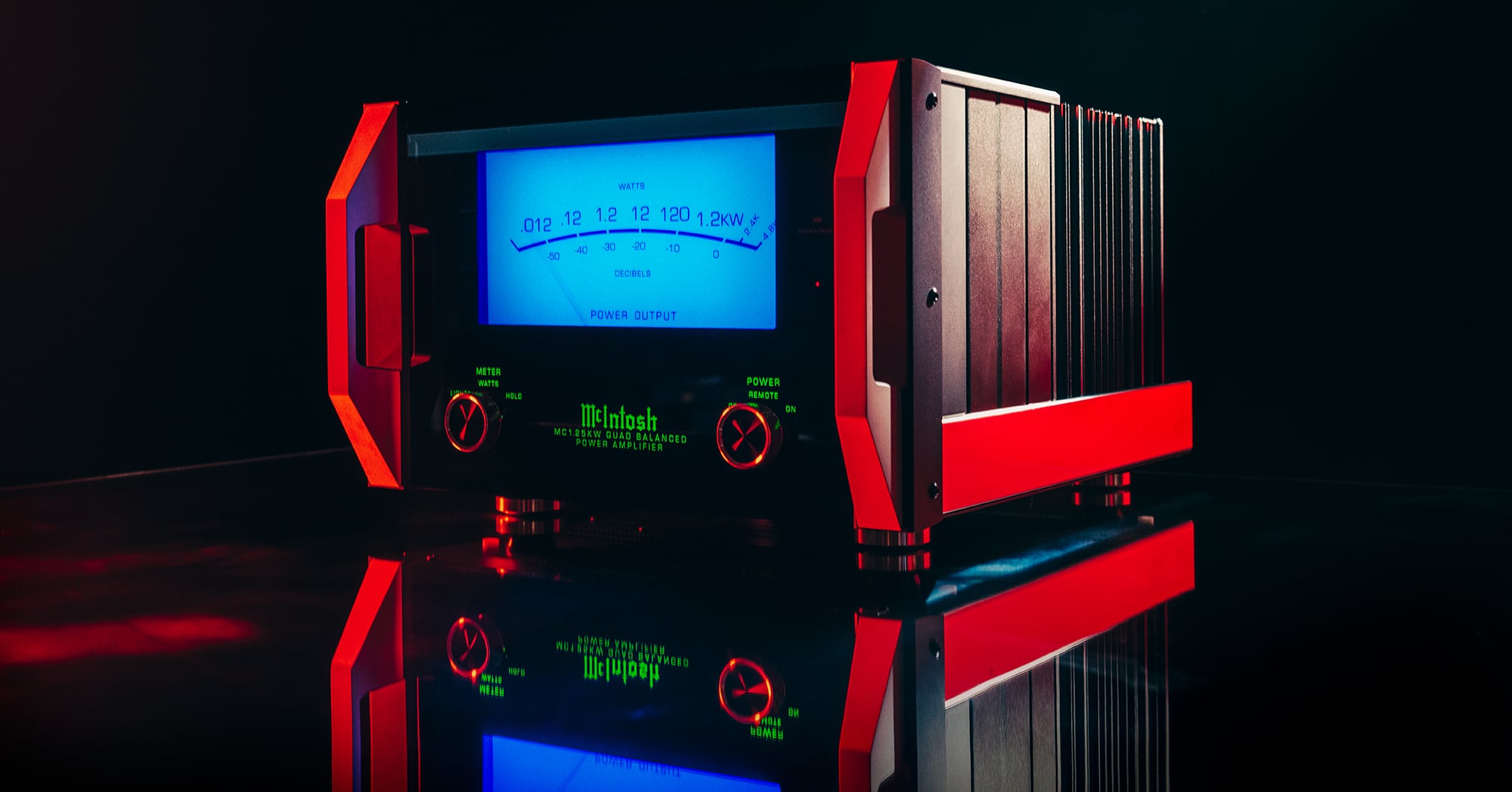
In the US, how about trying a mcintosh valve amp? I've heard good things about those, although I have not heard one myself.
 
Another well regarded make is Luxman, of course.
 
I hear that for newly build amps Hiwatt clones such as Hi-Tone are actually better (but not cheaper). For guitar use. Hiwatt themselves are supposed to cut a couple corners now.
It could well be, I'm out of touch with a lot of the news in that field now, I haven't done any band pa work for a long time, I'm focused mostly on software nowadays. It's a shame if that's the case, they used to be excellent. It's a very competitive market, very hard to make any money and stay in business.
 
It could well be, I'm out of touch with a lot of the news in that field now, I haven't done any band pa work for a long time, I'm focused mostly on software nowadays. It's a shame if that's the case, they used to be excellent. It's a very competitive market, very hard to make any money and stay in business.

Not to mention with age only going forward it gets more challenging to lug all the gear around.
 
Just out of interest, how much is that MB rackmount amp in the states? If they are popular you might be able to pick up a good used one from a studio clearout. :)
 
Which reminds me of this company in northern ireland, they sell a lof of studio disposals at very cheap prices. I've bought a couple of things from them over the years, always good stuff and good service. Maybe not very convenient for you in the US though! They typically stock a vast range of kit.

These are the amps in their current list.
I don't have any personal connection with the company of course, apart from having bought a few things from them! :)

Just looking through that list, spotted this pair of HH monoblocks. Designed to be used with Rogers LS3/5A studio monitors (the well-known BBC designed Rogers monitors).
Of course some Quad 405's would be a similar amp you would use with those rogers speakers. I expect those HH boxes would need re-capping; maybe anyway.

HH, another classic british audio company. https://hhaudio.com/

"The H-H AM8/12 is uniquely designed to operate with the famous BBC Specification Studio Monitor (Loudspeaker) model LS3/5a. There is a switch mounted inside the amplifier that allows the frequency response of the unit to be modified. When the switch is in the 'down' position, the frequency response is 'flat' and the amplifier is suitable for general purpose use with larger speakers. When the switch is in the 'up' position the frequency response is 'corrected' to match the characteristics of the LS3/5a loudspeaker."

They won an award for that amp at the time, These would have been likely used in BBC studios, so they would have been top notch quality. I think that's a transistor amp though, not valve, although I could be wrong.

That brokers gets all kinds of stuff in, the list is constantly changing. I'm sure there are similar used audio brokers in the US.
 
Just out of interest, how much is that MB rackmount amp in the states? If they are popular you might be able to pick up a good used one from a studio clearout. :)

The Mesa 2:90 goes for $800-1000 asking price in buy-it-now/store formats, plus shipping and sales tax.

If there is ever one that pops up for free auction I'll probably pick it up. I like auctions better because if I beat somebody then I know there is some other sucker out there willing to pay almost the same price as I do, and hence there is hope for resell without big loss.

There's also a 2x50 W model. And I think Freyette had a similar offering for a full-range tube power amp. Or was it VHT?
 
Can't say. For sure you have a way better ear for music than me.
If this thing is good, you want it, you can afford it, get it. If you're nuts or not, is up to you. 😁

I dunno. A major bottleneck around here is space in the house. I mostly stopped buying physical toys except computers, for good reason. I don't think I have 2 U free in any existing rack.

Decisions, decisions.
 
Back
Top