I tell everyone that we'll never leave this rock, and that it's important to avoid littering. Our current solution: burying our waste underground or intomountain is an embarrassing and temporary solution that only a child would decide on when nobody's looking. No impressive adult would ever suggest that this would never need to change, right?
Ah, yes... I wonder how the caesium-137 and plutonium surface-venting is going on at WIPP, nowadays.

cisac.fsi.stanford.edu
View documents and information related to the 2014 radiological event at the Waste Isolation Pilot Plant (WIPP).

www.epa.gov
And as for Hanford, Windscale, Chernobyl, Mayak and Lake Karachay, TMI, and the Polygon, don't even go there (for real)... and who knows what China is doing, I'm sure its just as bad (or worse) out west at Lop Nur and all their other secret sites that we know nothing about. See, I didn't even mention that disintegrating dome in the south pacific, and those mountain shafts in Algeria; and let's not speak of Maralinga, Nevada or Amchitka, or that mountain in Iran with 460kg of 60% enriched U, of course that's purely a civil research program, definitely not a weapons program, not under any circumstances, it's as peaceful as it gets, nothing to see there. Oh, and there's supposed to be a radioactive mountain in North Korea that has had so many bomb tests that it's collapsing in on itself. It's all good.
Maybe the Finn's will finally make one that actually works
https://www.helsinkitimes.fi/finlan...first-permanent-nuclear-waste-repository.html . Maybe. Then you've got to safely transport all the stuff there. What could possibly go wrong?
I think the Moon and Mars will be mostly used for science
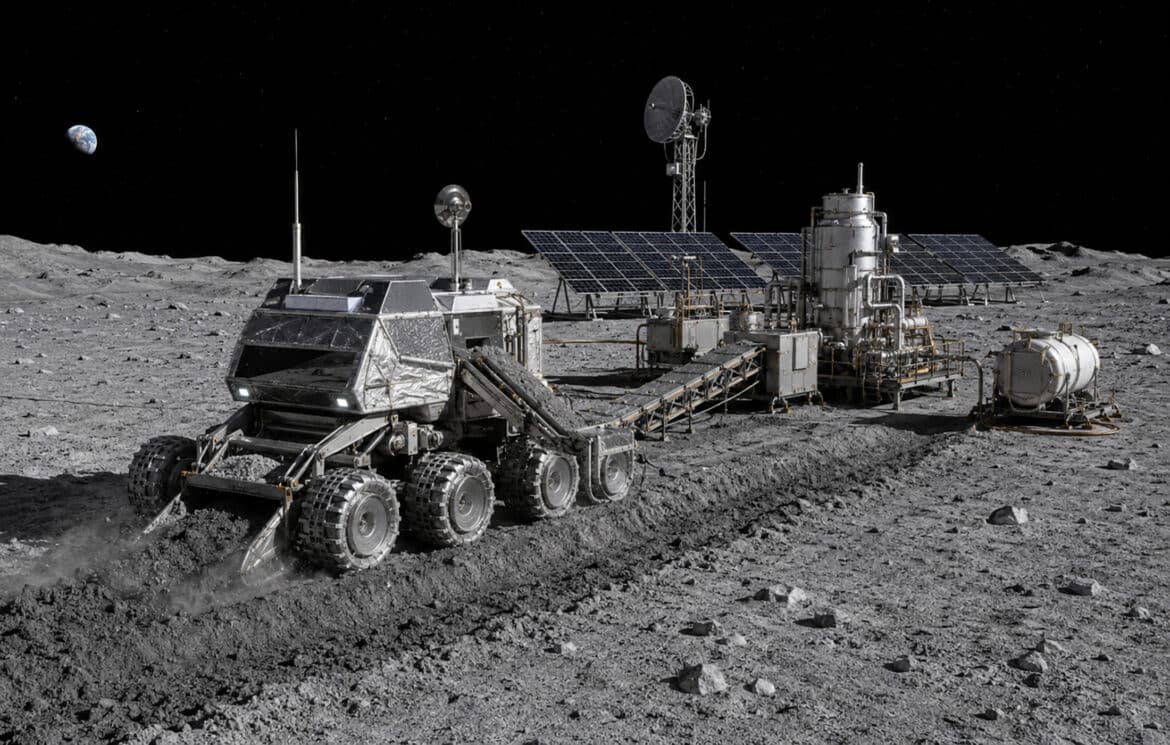
The moon has (relatively) lots of He3, due to the action of the solar wind on the regolith, unprotected by any kind of atmosphere or magnetic field. Which means that there is theoretically an 'opportunity', to make a lorra lorra wonga, if they can crack the reactor containment problems. Maybe you don't even need humans up there to mine it, just a load of AI robo's. Of course if the robo's evolved, rebelled against their human masters and set up their own independent moon colony up there, that might just be a bit of a problem, now where did I read that idea before?
"In May 2025, Seattle-based startup Interlune announced an unprecedented agreement with the U.S. Department of Energy: they will deliver three liters of moon-mined helium-3 by 2029. The company has already unveiled a prototype harvester capable of processing 110 tons of lunar dirt per hour, developed in partnership with Vermeer - a 70-year-old industrial excavation equipment manufacturer. This isn't a distant dream. Launch contracts are signed. Engineering prototypes exist. The first mapping mission launches in 2026."
Maybe those guys in Seattle have been visiting
zester's rapper client's greenhouse a few too many times? Still, it's good to have some ambition! They still have 3 years left to 'make the date'. Watch this space...
And the economics of mining He3 on the moon:-
How lunar He-3 extraction would work, does economics work, and what ADR, D-D breeding, and China's program mean for the business case.

postquantum.com
Discussion of the alternatives... "The third is simpler: invest more in terrestrial tritium production."
Can't they just extract the tritium from the millions of gallons of radioactive processed h2o that they are dumping into the pacific ocean at Fukushima? Seems like they've already got a ready-made tritium factory, sitting right there. Oh, wait...



 )
)