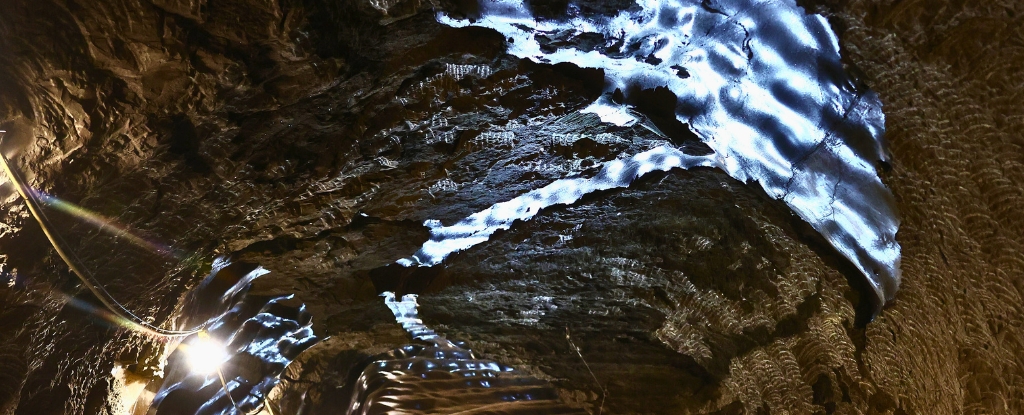
I'm stuck on this rock for some time.

Only 3 places to go
Moon
Mars
Moon Europa.
None of them have magnetosphere to protect me against 0.99c speed particles.
None have descent atmosphere.
None protection for uv.
And on Europa Moon in need to drill kms through muddy like ice water.
 
I'm quite sure there must be some planet out there in many of the thousand billions of billions stars ready for human life.
The problem resides on which ones and how to get there knowing that as we observe it it may no longer be there.
 
They just found this one orbiting a red dwarf, it's rocky, they think it has liquid water, and its right in the middle of the goldilocks zone. The only snag is that it's 49 light years away. The other snag is it's about 5.6 times as massive as earth so gravity will be proportionately higher, still, I guess it would build the leg muscles up. :-)

I'd second the mauritus suggestion! Although Bruges and Hobart are pretty nice too, in a pinch.

Couldn't they have thought of a better name though? Like, oh, 'Pandora' or something?
 
The Europa theory seems to be boarding up against the problem of not observing any O2 anywhere. Sub-surface evolution?
It still may be life with entirely different metaboiism but not photosynthesis in an atmosphere.
 
If Mauritius doesn't work out, you could always try Svalbard. The good news is you don't need any visa to stay, anyone can go and live there, I believe, by some magical international treaty. And they have the northern lights. Need to wrap up warm, though. :)
 
The Europa theory seems to be boarding up against the problem of not observing any O2 anywhere. Sub-surface evolution?
It still may be life with entirely different metaboiism but not photosynthesis in an atmosphere.
I think they were hoping for hydrothermal vents and possibly different life chemistries, there are similar regions in the deep oceans on earth where various types of 'extremophiles' have been found.
 
I got some Chinese friends. They told me Kunming has a special microclimate which means the weather is spring all year round, which sounds pretty nice. Unfortunately there is a big city there nowadays, but there must be places outside the city that are still unspoilt. And being china they also have lots of fantastic mountains. Apparently it's a favourite place in China for westerners to go.
 
I think they were hoping for hydrothermal vents and possibly different life chemistries, there are similar regions in the deep oceans on earth where various types of 'extremophiles' have been found.
What could be the triggering factor? It's unlikely to be temperature or volcanic matter because that's present on many places above the surface too. Pressure? There should be a correlation while looking at species around several of these vents at a different depth. Not sure if that's possible...
I don't think this theory is solid. It could be true.

Edit: it could be spores or whatever travelled through interstellar space but that's kind of moving the goalposts. "Life evolved somewhere else" is like an escape route to get away with no direct explanation.
 
I'm quite sure there must be some planet out there in many of the thousand billions of billions stars ready for human life.
The problem resides on which ones and how to get there knowing that as we observe it it may no longer be there.

Imagine, we find such one, pretty much exactly like earth.
And imagine we had some kind of way to get there in a couple of months.
What will you do there?
 
What could be the triggering factor? It's unlikely to be temperature or volcanic matter because that's present on many places above the surface too. Pressure? There should be a correlation while looking at species around several of these vents at a different depth. Not sure if that's possible...
I don't think this theory is solid. It could be true.

Edit: it could be spores or whatever travelled through interstellar space but that's kind of moving the goalposts. "Life evolved somewhere else" is like an escape route to get away with no direct explanation.
Life seems to be able to adapt and find a way to adjust it's chemistry and survive in some really crazy places. Some more about the organisms living around deep sea volcanic vents here:-

Some more examples of remarkable adaptations:-
1. 'radiotrophic' fungi in the Chernobyl nuclear power station have adapted to use hard radiation as their energy source: https://en.wikipedia.org/wiki/Radiotrophic_fungus
2. the 'deep biosphere': bacteria have adapted to survive up to 10km below the land surface, deep down in the earth's crust: https://en.wikipedia.org/wiki/Deep_biosphere
3. an experiment on the ISS placed bacteria in a deep vacuum for 2 years outside of the spacecraft; they were able to remain viable https://www.nature.com/articles/s41598-023-49525-z

What's the trigger? I think it's more a case of life tries very hard to adapt and survive, by using whatever resources are available in it's environment. Which perhaps makes one re-consider ideas like Fred Hoyle's panspermia hypothesis in a different light. Life appears able to survive in much more hostile environments than previously thought. Of course... this doesn't appear to be anywhere near so feasible for more complex organisms like the higher animals, it's mostly single-celled critters.

Or, as they said in that movie, "life will find a way".
 
when you think more about how human evolved you then realize that there is 0 places for us to be. human body in it's way to where we are as species - it is so tied to the earth's conditions. i much dislike all these non-sensical dream-like future scenarios of being a cosmic civilization -- as if we are not such already. aren't earth a celestial body in cosmos anyway? all these, mars, moon, whatever suitable earth-like place to explore is usual "noodles" you fed up by intellectual charlatans. from science perspective only, it is though, very valuable to study, undoubtful
 
Galactic cosmic rays (GCRs) and solar energetic particles (SEPs) could be problamatic.
[ Unless , you can encapsulate yourself in all directions with 2m of water ]
 
Galactic cosmic rays (GCRs) and solar energetic particles (SEPs) could be problamatic.
[ Unless , you can encapsulate yourself in all directions with 2m of water ]

Ya...that sounds complicated..

I was REALLY wondering what movies would be shown during the flight and if I could "pay" for more seat leg room.
 
And this is the one I forgot earlier, which is at least one complex lifeform that can survive in extremely hostile environments: tardigrades.

And that reminds me: giant bacteria brought back to life after being deep frozen in permafrost since the last glaciation:

Now, whether chopping your head off and freezing it in liquid nitrogen is going to allow you to be brought back to life in 40k years, who knows. Some idiots are trying it, apparently.
 
Back
Top