Recommendations

A few more essential tools...
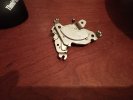
1. a magnet taken from an old broken hard drive; to magnetise your screwdrivers
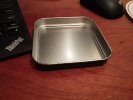
2. a tin lid to drop all your small screws and other small parts into, so you don't end up hunting for them on the floor :-)
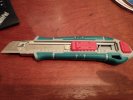
3. craft knifes of various types, and surgical steel scissors can be useful
4. multi-tip driver set, there are many different type of these, torx bits, etc
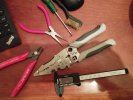
5. assorted small tools, of course you accumulate all different kinds of these, I've got boxes full of all kinds of them; yes like someone said it's hard to know where some of them came from ☺️

You can actually do quite a lot, even with a just little kit. I only have a soldering iron and a couple of multimeters at home, and a bunch of tools. Of course if I have anything more difficult to do I know I can always take it into work (and ask nicely!). 😄 I'm a software guy anyway, I only tinker with electronics nowadays. I really ought to get back into it more; there's never enough time!
t5.jpegt4.jpegt3.jpegt2.jpegt1.jpeg
 
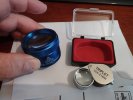
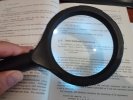
These small magnifiers/jeweller's loupes are useful; from the usual place. The blue one is actually quite good quality, I was surprised at the price. You can also get types with built-in LED lights, my GP used one on me recently to inspect a freckle (luckily it was one of the harmless ones).
t6.jpeg
 
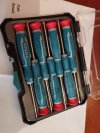
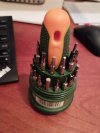
I got this nice set of small screwdrivers a couple of months ago. The red tops rotate freely against your hand. And yet another magnifier with built-in led lights.
t7.jpegt8.jpeg
 
Some recommendations from eevblog and 'mend it mark'. Of course you don't need all of 'mend it mark''s stuff for a hobby, but it's interesting to see his gear.
For setting up a home electroncs lab, if you follow the eevblog videos, you can't go far wrong. You've probably already got a lot of the stuff in your garage or workshop anyway.
Dave says get a couple of cheap multimeters and don't bother with a Fluke, so you can just ignore what I say. 😂

View: https://www.youtube.com/watch?v=R_PbjbRaO2E

View: https://www.youtube.com/watch?v=HicV3Z6XLFA

And here's 'mend it Mark' - this is a very good setup. Of course if you bought all this stuff new it would cost a fortune. Ebay (and used electronics factors) is your friend. If you're a repair tech like this guy you can buy broken or half-working kit and fix it, I'd be prepared to bet that's how he's gotten hold of some of his expensive HP, Agilent, Tek etc gear. Either that or he's making way too much money. 😄

View: https://www.youtube.com/watch?v=IWBDrqGmTnQ

View: https://www.youtube.com/watch?v=Mn9-L7ob6H8
 
Another very good video, perhaps more appropriate to people interested in modern digital and computer electronics, from Louis Rossman. Again, you don't need all this stuff for a hobby, but it's interesting to see how he does things. The guys in the electronics lab where I work have similar types of microscopes to the one he is using, from memory I think the ones they have at work are Olympus microscopes.
View: https://www.youtube.com/watch?v=bVoBZqlvCKo

And another video from Louis, talking about soldering techniques for modern high density surface mount digital electronics. You really do need the right tools to work on this kind of stuff, I think.
View: https://www.youtube.com/watch?v=ys1zDMcDh_c

And a tour of his workshop.
View: https://www.youtube.com/watch?v=b4wwvKcsblE
 
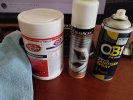
Looks really good, I might get one of those sets. I find these cheap microfibre cloths that you can pick up in hardware stores work really well for removing dust or smears. Also the alcohol wipes, 80% alcohol spray and IPA spray are very useful. After covid there are lots of these surplus alcohol wipes and sprays for sale cheaply here, that big tub of 75% alcohol wipes only cost me 1 GBP, the tub contains 150 wipes, so not bad. Good for cleaning smartphone too.
t9.jpeg
 
That's another thing I read more and more about lately; checking the capacitors for swelling or cracking. Seems every issue brought up online gets people told to look for that. Again, in my decades of designing and building electronics, I saw that once; in some antiquated power supply pulled from somebody's basement that I think lit Thomas Edison lab and a couple of times where someone shorted the power supply and it had a lot more going wrong with it than just the caps.

I'm not saying it doesn't happen. I'm saying either capacitor manufacturing has gotten worse over the years or people are looking at low hanging fruit too easily.
 
And then we have the fakes...
View: https://www.youtube.com/watch?v=qezEiwQOGJs
... and the rubycon label on the one inside is probably fake too.

I think I've only ever seen one or two bad ones in real life. As for 'recapping' amplifiers, I've never needed to do it.
The Gibson guitar company also uses fake capacitors in their higher priced electric guitars' tone control circuit. A small worthless cap in a larger one resembling an expensive one. Of course they don't fail in that position, but it is still interesting to know.

I had a Samsung TV go out and repaired it by replacing the broken looking capacitors.
 
It's not good. They fake pretty much everything. You can't trust anything they sell, you just have to put your faith in buying from reputable component suppliers, and hope for the best. It wouldn't surprise me if some of the cheap audio gear I've bought from aliexpress contains some fake components; I'm pretty sure their 'ALPS' pots aren't made by ALPS... although they work well enough.
View: https://www.youtube.com/watch?v=JM7We9oH0oU
 
That's another thing I read more and more about lately; checking the capacitors for swelling or cracking. Seems every issue brought up online gets people told to look for that.
I've seen 1 P4 motherboard with a cap with something dry leaked on the top, but the board still powered on and worked fine :p (used it for a Tvheadend server with antenna for about a year)

I bought $5 soldering kits and tried to use em, but never really got into it or learned how to solder. I made 2 hard drive speakers with safety pins and wire clamps, and pressure-mounted a HDMI port on an Xbox with tissue :p
 
ABit was sued into bankruptcy from bad caps.

Dell had a very long extended warranty to replace system boards that failed with bad caps.

I’ve seen many, many PSU deaths from bad caps. The Bestec 250w unit found in a zillion HP desktops was a system board destroyer. Pure junk with failed Chinese cloned caps caused by industrial espionage with an incomplete electrolytic paste formula.
 
I have an Antex soldering iron that I bought in 1970 that is still going strong; amazingly I could still buy bits for it in 2018.
Yes they're nice little irons, I think perhaps not so well known as Weller etc. I also had one I bought in the 70's that lasted about 30 years, I'm on my second one now. I noticed eevblog liked the Hakko iron too in that first video, that has been mentioned a couple of times in this thread; I've never tried one of those but perhaps they are good too.
 
Back
Top