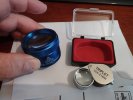
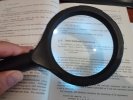
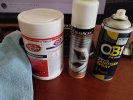
A few more essential tools...
1. a magnet taken from an old broken hard drive; to magnetise your screwdrivers
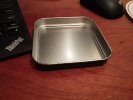
2. a tin lid to drop all your small screws and other small parts into, so you don't end up hunting for them on the floor
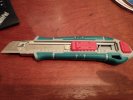
3. craft knifes of various types, and surgical steel scissors can be useful
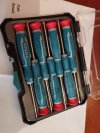
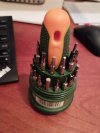
4. multi-tip driver set, there are many different type of these, torx bits, etc
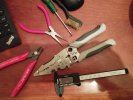
5. assorted small tools, of course you accumulate all different kinds of these, I've got boxes full of all kinds of them; yes like someone said it's hard to know where some of them came from
You can actually do quite a lot, even with a just little kit. I only have a soldering iron and a couple of multimeters at home, and a bunch of tools. Of course if I have anything more difficult to do I know I can always take it into work (and ask nicely!). I'm a software guy anyway, I only tinker with electronics nowadays. I really ought to get back into it more; there's never enough time!
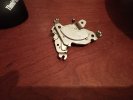
1. a magnet taken from an old broken hard drive; to magnetise your screwdrivers
2. a tin lid to drop all your small screws and other small parts into, so you don't end up hunting for them on the floor
3. craft knifes of various types, and surgical steel scissors can be useful
4. multi-tip driver set, there are many different type of these, torx bits, etc
5. assorted small tools, of course you accumulate all different kinds of these, I've got boxes full of all kinds of them; yes like someone said it's hard to know where some of them came from
You can actually do quite a lot, even with a just little kit. I only have a soldering iron and a couple of multimeters at home, and a bunch of tools. Of course if I have anything more difficult to do I know I can always take it into work (and ask nicely!).
I'm a software guy anyway, I only tinker with electronics nowadays. I really ought to get back into it more; there's never enough time!