I like to give you some recommendations, but to give you any useful advice one first needs to know, where you journey is going to, where your current level is (electronics newbie, advanced, fully professional) and how much money are you capable to spend.
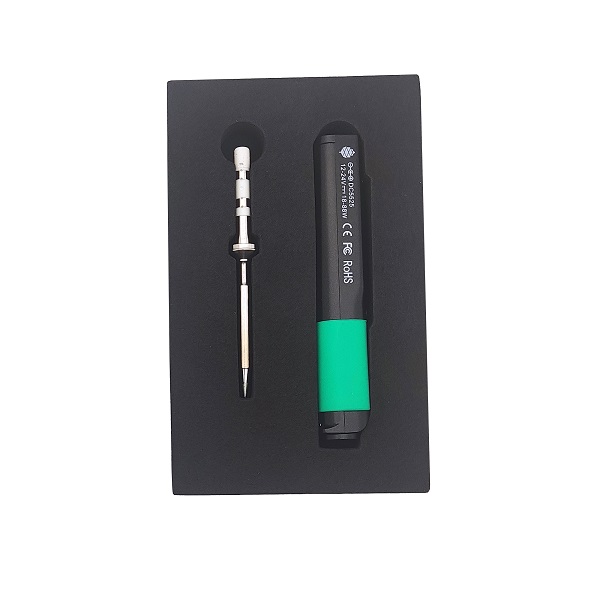
I use a soldering station with exchangeable tips by
Weller. But there are others, of course. For
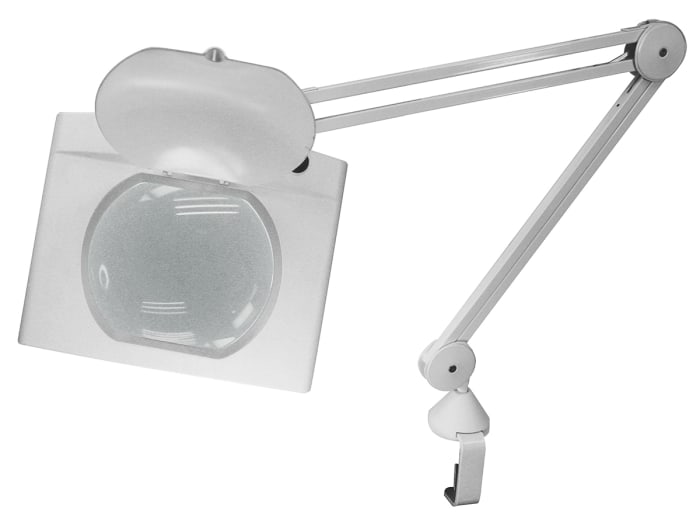
desoldering BGA ICs you also need a hot air station, too, plus a vacuum tweezer. A magnifyer lamp, a grounded (ESD protection) soldering mat and some soldering frame are also highly recommendable.
In any case I recommend to use professional soldering euipment to ensure it's heating up quickly and above all the temperature is adjustable and kept stable. With a cheap soldering iron you can kill your stuff.
I highly recommend to get first a grounding wrist strip before any electronics is touched at all.
You can get those for a few bucks, and IMO it belongs into every lab where electronics is handled, such as assembling and replacing computer hardware.
There are two kinds of oscilloscopes: fully integrated ones and USB oscilloscopes.
Pro of the USB ones: A lot smaller, saving space, and are good for travel or mobile measurements, since they are USB powered. Laptop + USB scope = mobile lab in a backpack for measurements even deep down in the forest.
They cost less, since you don't need to buy an embedded PC with monitor plus OS, which is essential part of any modern digital oscilloscope. Many run Windows, others Linux, some perhaps even FreeBSD, I don't know. In most of the cases you don't recognize much of the OS at all, and most of the times it doesn't really matter. But with an USB scope you spare to pay for all of this, because this parts of a scope you provide with your computer. Minus the physical UI (buttons, knobs and switches.) It's very comfy to do it all on your computer's GUI, especially for newbies, or when you just need to get quickly a rough glimpse at some signal.
Con: You need to get its software running on your computer. Of course they all support Windows, many support Linux, but under FreeBSD I only know two ways:
1. VM or Linuxulator (My
PicoScope runs under VB, since they simply still don't offer their software for FreeBSD [could be not that hard to migrate it from Linux.])
2. Use
misc/openhantek. My Hantek scope works pretty fine with it. Nice piece of software! But you are limited to scopes compatible with that software, only. (I don't know, but maybe there is also other oscilloscope software for FreeBSD supporting other scopes.)
Anyway which oscilloscope to pick/recommend heavily depends on what your're going to do. (power supply, automation, network, computers)
Besides many modern oscilloscopes bring lots of analyzing software onboard, like FFT, network analyzers, recognize and read the contents of certain buses et al, it's mostly about number of channels, bandwidth (frequency), ADC resolution and accuracy. The higher the resolution, the higher the fequency and the more accurate the more expensive, of course. You can get a 2 channel 8bit 20 MHz USB oscilloscope for under 100 bucks, which is for many things, particulary for electronics newcomers, fully sufficient. But you cannot do much with such on today's computers hardware, since those run at some GHz. An integrated high accuracy four channel 3 GHz mixed signal scope with 12 bit vertical resolution may start app. at ~9k€.
You may check the large second hand market for a suitable used one.
(Perhaps you may change the general title from just "Recommendations" to "Recommendations for Electronics Lab Equipment" or likewise.)



 Greatest hardware UI ever devised. A study in usability.