Recommendations

Hey gang:

I want to buy the following and would like some recommendations:
  1. Soldering Station
  2. Oscilloscope
  3. De-soldering Iron
  4. DC power supply
  5. Antennae
Tx
 
I like to give you some recommendations, but to give you any useful advice one first needs to know, where you journey is going to, where your current level is (electronics newbie, advanced, fully professional) and how much money are you capable to spend.

I use a soldering station with exchangeable tips by Weller. But there are others, of course. For desoldering BGA ICs you also need a hot air station, too, plus a vacuum tweezer. A magnifyer lamp, a grounded (ESD protection) soldering mat and some soldering frame are also highly recommendable.
In any case I recommend to use professional soldering euipment to ensure it's heating up quickly and above all the temperature is adjustable and kept stable. With a cheap soldering iron you can kill your stuff.
I highly recommend to get first a grounding wrist strip before any electronics is touched at all.

https://external-content.duckduckgo.com/iu/?u=https%3A%2F%2Fwww.staticsafe.co.uk%2Fwp-content%2Fuploads%2F2016%2F08%2FWrist-strap-blue-1024x796.jpg&f=1&nofb=1&ipt=d78f91bf2952f08ed3280121512a758916c268138ff68a3578fbede71e7c0126&ipo=images

You can get those for a few bucks, and IMO it belongs into every lab where electronics is handled, such as assembling and replacing computer hardware.

There are two kinds of oscilloscopes: fully integrated ones and USB oscilloscopes.


https://external-content.duckduckgo.com/iu/?u=https%3A%2F%2Fwww.evearly.news%2Fen%2Fwp-content%2Fuploads%2Fsites%2F7%2F2024%2F09%2Fyokogawa-releases-compact-hd-oscilloscopes-for-automotive.jpg&f=1&nofb=1&ipt=b53a16a572bee617720f78a7cad32ce20fc644b2cd62e70f32e56535658e3172&ipo=images
https://external-content.duckduckgo.com/iu/?u=https%3A%2F%2Fi5.walmartimages.com%2Fasr%2Fde093452-bea1-4313-8bf3-3f16b8c022da.6b82276d68ad212e60ef6a203926e765.jpeg&f=1&nofb=1&ipt=8d248925f1d87221e7f735a055047f164b7f966f0750c9633b9045d1757ffb33&ipo=images

Pro of the USB ones: A lot smaller, saving space, and are good for travel or mobile measurements, since they are USB powered. Laptop + USB scope = mobile lab in a backpack for measurements even deep down in the forest.
They cost less, since you don't need to buy an embedded PC with monitor plus OS, which is essential part of any modern digital oscilloscope. Many run Windows, others Linux, some perhaps even FreeBSD, I don't know. In most of the cases you don't recognize much of the OS at all, and most of the times it doesn't really matter. But with an USB scope you spare to pay for all of this, because this parts of a scope you provide with your computer. Minus the physical UI (buttons, knobs and switches.) It's very comfy to do it all on your computer's GUI, especially for newbies, or when you just need to get quickly a rough glimpse at some signal.
Con: You need to get its software running on your computer. Of course they all support Windows, many support Linux, but under FreeBSD I only know two ways:
1. VM or Linuxulator (My PicoScope runs under VB, since they simply still don't offer their software for FreeBSD [could be not that hard to migrate it from Linux.])
2. Use misc/openhantek. My Hantek scope works pretty fine with it. Nice piece of software! But you are limited to scopes compatible with that software, only. (I don't know, but maybe there is also other oscilloscope software for FreeBSD supporting other scopes.)

Anyway which oscilloscope to pick/recommend heavily depends on what your're going to do. (power supply, automation, network, computers)
Besides many modern oscilloscopes bring lots of analyzing software onboard, like FFT, network analyzers, recognize and read the contents of certain buses et al, it's mostly about number of channels, bandwidth (frequency), ADC resolution and accuracy. The higher the resolution, the higher the fequency and the more accurate the more expensive, of course. You can get a 2 channel 8bit 20 MHz USB oscilloscope for under 100 bucks, which is for many things, particulary for electronics newcomers, fully sufficient. But you cannot do much with such on today's computers hardware, since those run at some GHz. An integrated high accuracy four channel 3 GHz mixed signal scope with 12 bit vertical resolution may start app. at ~9k€.

You may check the large second hand market for a suitable used one.


(Perhaps you may change the general title from just "Recommendations" to "Recommendations for Electronics Lab Equipment" or likewise.)

 
Tektronix 453 or nothing :) Greatest hardware UI ever devised. A study in usability.

I'm particular to Weller soldering irons. I have a Kakko desoldering pump which works well but I did OK with a simple solder sucker, too.
 
I highly recommend to get first a grounding wrist strip before any electronics is touched at all.
In my decades of designing and building electronics professionally and as a hobby, I have never used one and don't know any technicians who ever did.

When a tech got some of those new fangled CMOS IC chips in one day, a new tech came up and started fingering them. "Are those the new fangled CMOS IC chips I've been hearing about?", he asked. "They were," replied the tech.

Tektronix 453 or nothing
I said the same about a 465B in the past.
I'm particular to Weller soldering irons. ... I did OK with a simple solder sucker, too.
Yep. But nowadays everything's surface mount with pins under the chips and reflowed.

  1. Soldering Station
  2. Oscilloscope
  3. De-soldering Iron
  4. DC power supply
  5. Antennae
The list is too vague. A soldering station comes in a lot of flavors, controls, simple and expensive depending on what you want to solder and unsolder.
Same with an oscilloscope. Are you doing only audio, your computer, or what? Wide price ranges there, too.
DC power supply. What voltages and current do you need? Variable, I presume, or not?
Antenna for what frequency? Transmit, receive or both? Local? 50 miles out? Moon bouncing? Can you put up a tower? Is long wire good? For that matter you can build your own.
 
Tektronix 453 or nothing :) Greatest hardware UI ever devised. A study in usability.
Haha. I figured this was what it was. Great suggestion.

I'm particular to Weller soldering irons. I have a Kakko desoldering pump which works well but I did OK with a simple solder sucker, too.
I've gone through too many cheap irons and I "suck" at de-soldering (great joke) without a wick. I've seen some electronic ones that I like that heat and remove the solder in one. Much easier for me.

In my decades of designing and building electronics professionally and as a hobby, I have never used one and don't know any technicians who ever did.
I've had one since I started fixing computer for a fee. I also take my socks off. ;)

The list is too vague. A soldering station comes in a lot of flavors, controls, simple and expensive depending on what you want to solder and unsolder.
Same with an oscilloscope. Are you doing only audio, your computer, or what? Wide price ranges there, too.
DC power supply. What voltages and current do you need? Variable, I presume, or not?
Antenna for what frequency? Transmit, receive or both? Local? 50 miles out? Moon bouncing? Can you put up a tower? Is long wire good? For that matter you can build your own.
re: oscilloscope: Electronics projects and work.
re: DC: yes, variable. Something for a desk to test electronics.
re: antenna: pentesting.

1) Hakko FX888
2)
3) Learn how to use solder wick. Its all you need.
4) Very Vague. Switching or Linear? Voltage? Maybe you want benchtop power supply.
5) Depends on wavelength.
(see above)

Thanks for your times, homies.
 
I really think a couple of Walmart Soldering irons (Formerly RadioShack) instead of soldering station.

Learn to solder with junk torches and buy good tools once you master pencils.

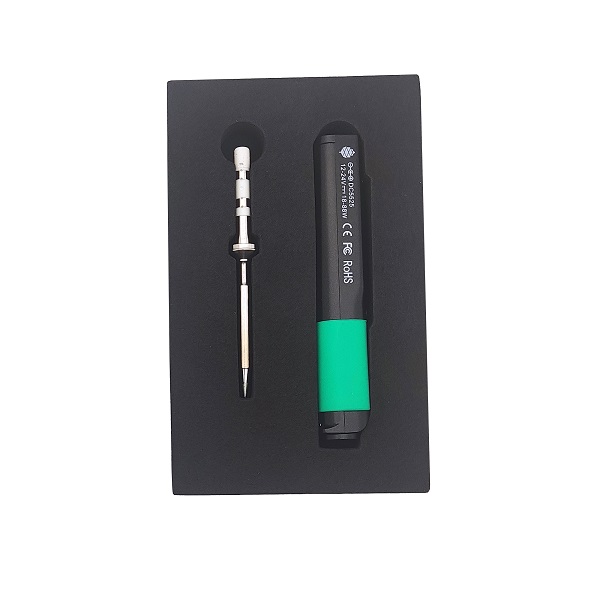
USB pencils seem to be all the rage too. I just can't see me using one.

Tip Management is the key to soldering. Fresh out of package Wally Torch is easy as crap.
As it ages the element loses its kick and the tip gets shot.
Just trash it. 20 bucks for more.
 
Hey gang:

I want to buy the following and would like some recommendations:
  1. Soldering Station
  2. Oscilloscope
  3. De-soldering Iron
  4. DC power supply
  5. Antennae
Tx
Have a look through eevblog's videos on youtube, he's done some good stuff.

My own thoughts though...

- soldering station: I like Antex kit. It's well-made and works well, and not too expensive https://www.antex.co.uk/soldering-stations
There's bound to be similar kit in the US. Don't forget your fine guage solder, 0.5 mm or thereabouts. Of course it depends what you're working on.

Scope - see https://www.eevblog.com/forum/testgear/help-me-choosing-new-oscilloscope/

De-soldering - get a solder sucker! But if you're thinking of things like BGA's, you need special tools.

DC power supply - this one looks like a ridiculously low price
View: https://www.youtube.com/watch?v=0qjLx_HsKUQ
, but I'd always try to get better quality western or japanese kit if I can. Dave is worth listening to on test gear in general.

Antennae - ask a radio amateur :-)

One you didn't mention - on modern electronics, you probably need a surface mount rework station. Hot air reflow, etc.
for example https://uk.farnell.com/antex/ud82d70/rework-station-surface-mount/dp/1204732

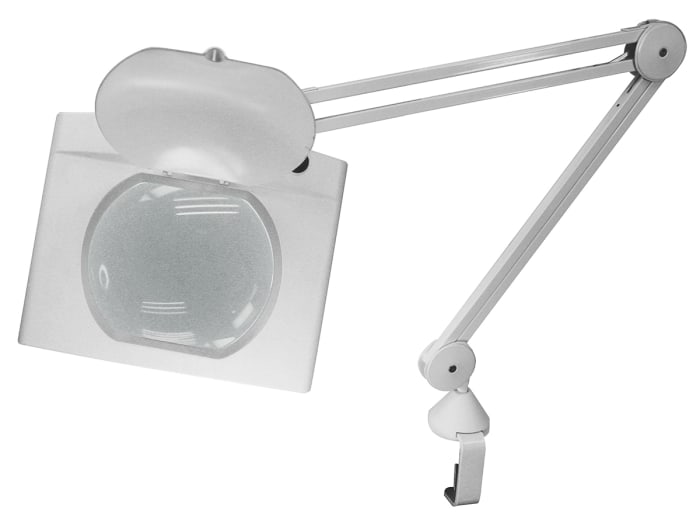
One more you didn't mention - stand mounted illuminated magnifier, invaluable nowadays.

And if you're going to be working on very high density SMD electonics, a stereo microscope, either digital or optical, can be very useful.

The other place to find stuff - ebay. If you can pick up industrial or mil surplus gear for a fraction of it's original price, still in good workng condition. Schools and uni's are another good source, they routinely sell off old kit that is often better made than the new cheap chinese kit.
 
USB pencils seem to be all the rage too. I just can't see me using one.
Never even heard of that. That's wild! I still have my Weller from decades ago. I still have others from longer ago than that.
buy good tools
Totally agree with that but my toolbox is filled with tools that I never bought. I have no clue where they came from but I've collected them for decades.
My brother is in construction. He has three of anything. He tells me I'd be surprised how many times someone comes on a job site and leave behind expensive tools that he just gathers up at the end of the day.
 
I keep a big wedge tip in my Weller. Its 70W and for XT60 connectors it works good.
Thick 12Ga multistrand wire with close pads. High heat wire.

So it really depends on the job. The rest of the flight controller I use a pencil type.
Harbor Freight/Northern/WallyWorld

Here is a USB type iron.

SMT i would need arm braces. I washed out a small SMT component and was lucky to refloat it.
Manual dexterity really matters with soldering.

7) For minute work add 8" Lighted Magnified Benchtop arm.

I see blackbird9 beat me to that one.
 
Yes Weller is the other big name in soldering equipment. I wouldn't waste time on aliexpress or walmart etc, unless its genuine industrial factory grade stuff.
 
Those benchtop magnifier lamps are nice for inspection after the job.
Checking for solder balls or whiskers between joints.

Torch is a torch. I find maintaining the tip a pain in the arse. Just buy another torch.
I bought Goot and something is wrong with it. Its crap. Supposedly premium.

Like a bicycle a ride is a ride. Brand dont matter. Does it work for you.
Do you need an LED on your torch?
 
Manual dexterity really matters with soldering.
And near-focus eyesight. As I've got older I've got more long-sighted, my close-up focus isn't as good as it used to be. I noticed my dentist wears binocular magnifiers, I've never tried them but they look pretty useful for close work. They fit on a frame like specs. Another option to go along with the bench magnifier.
 
One useful tool I've got is this Cree led flashlight. It has a focusable lens and three different brightness levels, it produces a very even white light. I got this in a hardware store, not very expensive. Very handy for brightly illuminating electronics for inspection.
torch2.jpegtorch1.jpeg

For example, this photo was taken with the board illuminated by that flashlight.
redmod3.jpeg
 
Because I am cheap I tried making my own tips. Nothing works the same.
Chrome Plated Copper Electrode.
Plating is what gives out. Once the chrome on tip is gone it is shot.

I wear a miners headlamp on some fine work.
 
This is the kind of thing she wears. I think her's are made by Nikon, I keep meaning to ask her about them when I go and see her, and somehow always forget! This is a Nikon set. You get an led light and the optical magnifiers. I've never tried wearing them but they look like they might be useful for electronics. She does all her dental work wearing them, I've noticed. The nice thing is your hands are completely free to work.
1790976621014.png


They come as a set like this
1790976910026.png
 
I would like to try and do some artsy solder work when i retire.
Stained Glass looks interesting and could be done in a backyard shed.

get a fluke.
Are they worth it... Harbor Freight meter is 1/6 the price..

I get where you are going but telling new mechanic to buy SnapOn is rough to swallow.
You have to want it. For life.
 
Are they worth it... Harbor Freight meter is 1/6 the price..
Yes cheap multimeters as a rule are junk. Cheap tools are almost always a waste of money imho. Well, the cheap one is ok for a kid to learn with. Of course if you're a penniless student then the cheap stuff is better than nothing. :-)
 
Back
Top