

I would agree with this except for the GPIO usage. That is really the main advantage.but no graphics. your best bet on freebsd is probably a low power x64 box.
FreeBSD GPIO on AMD64 is limited to a few boards. Minnowboard and APU.
For too long I was depending on a single digit LCD readout for AMP's used. So I finally built an inline meter power cord.
I put 5.5x2.1mm barrel M/F jacks on the ends and I used an old Walmart Multimeter and cut the probes.
I have started with the 10A port and that gives me two digits of resolution.
Inital testing on Station P1 Pro with RK3399 with CPUs downclocked to 600mhz via sysctl.
12VDC 0.26A Idle and 0.31A MAX with 6 cores running stress. 3.8W to 4.6W max
Built my own StationP1 Pro U-Boot on FreeBSD Ports from the roc-pc-rk3399_defconfig modified and now I have USB keyboard working. HDMI as well.
OS on 32B internal eMMC and u-boot on microSD for now. I did use Linux DTB for the PRO model.
The Station P1-Pro has a power button and LED that actually work.
I can shutdown the board with software and restart it with the button.
What does not work is shutting down from power button pressing.
My USB keyboard backlight goes off as well for power savings. So PMIC is working good..
It has taken me a while to get this Station P1-Pro working well. I have learned alot about manipulating u-boot ports.
When a board is not supported by mainline U-Boot it can be frustrating.
How about this crazy VVDN FreeScale server. It uses ARM32 server setup. It is not a SuperMicro NAS but uses their case.
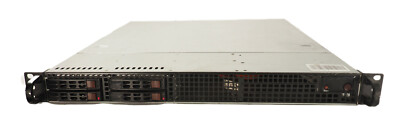
Supermicro CSE-111 VVDN DT4CS NAS Sever 24GB PC4 x2 ARM926DJ-S CPUs x2 759W PSUs | eBay
Model : DT4CS. Ram : 24GB PC4-1866. Processor : x2 ARM926EJ-S Integrated. Power Supplies : x2 PET750-12-050NA. Heat Sinks :x2. Credit Card. Ac Adapter / Power Cord .
www.ebay.com


 (2 5V pins + 1 GND)