A datacenter in space might be the silliest idea ever proposed.

I don't see heat dissipation as easy as some seem to imagine.

Plus the latency might be OK for LLM use, but you wouldn't be able to re-purpuse them for something else.
 
It's just investment bullshit, give us your money or stay behind type of FUD.

"X" in space is almost always a terrible idea.

It is far more efficient to house them in Antartica but Antartica is regulated.

Besides nobody has ever pulled anything of this kind if it wasn't a state actor under a huge budget. Most of it is Soviets/Russians, with Salyut and Mir and many important components of ISS, US had Skylab and participated in ISS, ESA/JAXA only on ISS. Despite Hollywood depicting people like Elon Musk being capable of inventing warp drive if someone irks them the wrong way, the reality is completely different, these people are nobody and did nothing in the actual 'market' of 'datacenters in space', which is just a auto-mode space station filled with computers. They built nothing in space. The biggest achievement of private space industry is rendezvous of SpaceX capsule and ISS, Soviets and Americans did that using disparate tech over a iron curtain back 50 years ago.

So yeah, a bunch of noobs trying to launch millions of dollars of RAM and other equipment into space. And then one mission fails, insurance has to give back all that money while the chip market reacts in negative way (prices go up) because somebody just burnt a pettabyte of RAM.

The payloads of average space launch are not expensive. Most of the cost is the intellectual property. Even for complicated comm sats used by multiple clients (TV broadcast sats and such), the input price of the payload hardware is merely in the range of thousands of $.

Now the funny thing is if AI was really AI it would work hard to invent better space tech so we can put it into space.
 
I remember reading ~20 years ago about how astronauts on the MIR/ISS were using old thinkpad laptops due to their larger silicon junctions inside the processors - apparently tiny nanometer processors are more prone to bit flipping due to radiation. did this get magically fixed in the meantime? I agree it's a money-making scam.
 
I remember reading ~20 years ago about how astronauts on the MIR/ISS were using old thinkpad laptops due to their larger silicon junctions inside the processors - apparently tiny nanometer processors are more prone to bit flipping due to radiation. did this get magically fixed in the meantime? I agree it's a money-making scam.
As far as I know,no.Even for modern commercial airliners,integrated circuits with crystal valves too small is an unacceptable reliability issue.
 
So here comes the question:What do you think is more realistic:Sending people to Mars to establish a colony within the next two decades,building a data center in space for "AI",or SpaceX will soon go bankrupt?
 
Heat dissipation from a satellite is principally by thermal infra-red radiation.

From:-
1782397406701.png


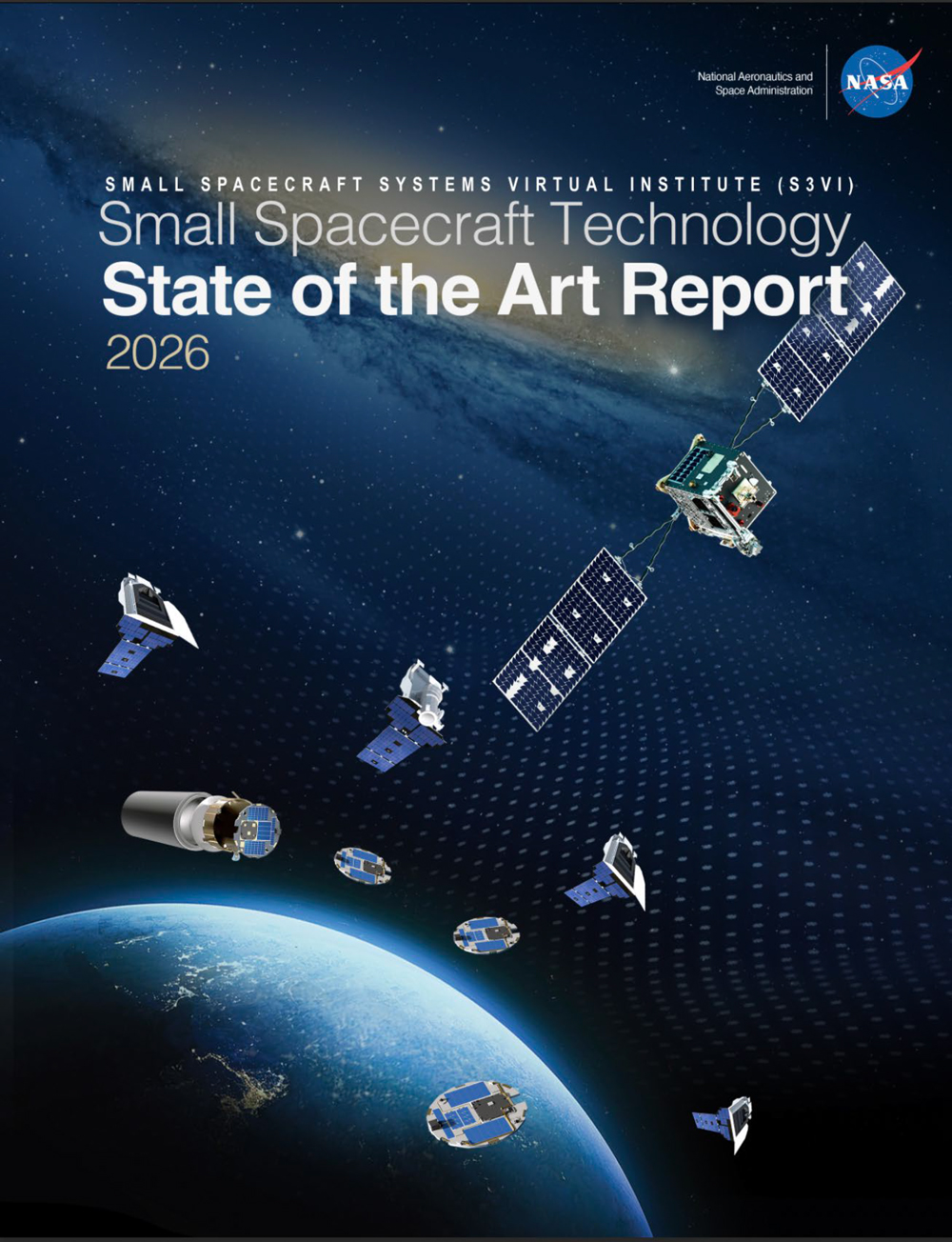
The heat exchange depends on several factors listed below. Solar absorptivity and infrared (IR) emissivity are surface optical properties referenced below and described further in Section 7.2.1: Sprayable Thermal Control Coatings, Tapes, and MLI. Thermal control of a spacecraft is achieved by balancing the energy flows as shown in Equation 1:

qsolar + qalbedo + qplanetshine + Qgen = Qstored + Qout,rad (1)


Where:-
  • Qgen (heat generated by the spacecraft) depends on the power dissipation of spacecraft components.
  • The amount of qsolar (solar heating) absorbed by the spacecraft depends on the solar flux, which is determined by the distance to the Sun, the surface area viewing the Sun (view factor), and the solar absorptivity of that surface.
  • The amount of qalbedo (solar heating reflected by the planet) absorbed by the spacecraft depends on the planetary body, the surface area viewing the planet (view factor), and the solar absorptivity of that surface.
  • The amount of qplanetshine (IR heating from the planet) absorbed by the spacecraft depends on the planetary body, the surface area viewing the planet (view factor), and the IR emissivity of that surface.
  • Qout,rad (heat emitted via radiation) includes the surface area designated as radiator space, the IR emissivity of the surface, and the difference in temperature between the spacecraft radiator and the heat sink to which it is dissipating, typically and most effectively to deep space. Qout,rad also includes heat lost through insulation or other surfaces not specifically intended to function as radiators (i.e., parasitic losses).
  • Qstored (heat stored by the spacecraft) is based on the thermal capacitance of the spacecraft.
The paper then goes on to describe many ways to facilitate the distribution and emission of heat from satellites.

So how much heat do we need to radiate?

Wikipedia tells me the following;-
"A single, relatively modest 36-megawatt data center rejects heat equivalent to the electricity consumption of roughly 40,000 homes. This substantial heat generation is primarily due to the energy consumed by the data center's operations."

Which seems to me to be an impossibly large amount of heat that would have to be radated into space from a satellite.

This NEC paper describes a typical satellite dissipating 300W of heat, which sounds a little less than the thermal output of the typical data centre. However they point out that space is at ~ -270 C, so if you have an efficient radiator, perhaps large amounts of thermal IR can be radiated. But surely not equivalent to 40000 houses?

So, either you divide the load up between hundreds or perhaps thousands of satellites, which sounds prohibitively expensive... or they have some technology that IS plausible to radiate that much heat. Or... they have some other technology that can do the work of the data centre while generating orders of magnitude less heat. 3D wafer-scale integration? Perhaps somethiing like Cerebras? https://spectrum.ieee.org/cerebras-chip-cs3 . There has to be more to this than meets the eye at first look, or they would not have a remotely plausible story. It would be interesting to know how they propose to achieve the data centre in a satellite.

Well now. How about if the actual data centre is on the moon, with a direct laser network comms link to earth of the type that was recently demonstrated in the Artemis II mission. Then the earth-local satellites only need to work as comms nodes. The moon is 1.3 light seconds from earth, which isn't too bad. And the moon itself can serve as a directly attached heatsink, that you can dump the heat equivalent to 40000 homes into.
 
So my idle musings above led me to this IEEE paper.

Someone has already investigated this in depth. A quote

"To understand how big this baseline area is in practice, I used the Stefan-Boltzmann law to model the heat-rejection area needed to keep a single chip that draws 700 watts of power—such as the H100 GPU chip, an AI stalwart—at a constant 60 °C, usually considered the sweet spot for GPU longevity and stability. I further assumed that the radiator is perfectly facing deep space, at a chilly background temperature of 3 kelvins. By this calculation, a single chip would require 1.4 square meters of radiator surface."

So either you have a really huge radiator... or the definition of 'data centre' is only a relatively small number of GPUs.

He goes on to say that to have any chance of it working, will require the development of new, super-efficient thermal radiators.
 
What about power. All the new Data Centers here have High Voltage Transmission lines running right into the plant.

How many solar panels would it take to provide that? Too many so they need nuclear power..
 
Let alone the large amounts of current that would have to be supplied to power typical modern servers. It sounds like a non-starter to me with current technology, unless they know something we don't. There have been developments in 3D chip lithography - building up in layers, instead of just horizontally. It seems to me they would need 'processors' that have orders of magnitude lower energy requirements than the current chips, if the thing is to be in orbit. But what do I know. I'm pretty sure Elon knows stuff that I don't know anything about.

And then when you start thinking about making the whole thing rad-hard, and shielding tiny logic gates from the solar wind, cosmic rays... well, it doesn't pass the sniff test yet. The normal thing in space-borne electronics is to use older, simpler chip designs with larger gate sizes, to make them less vulnerable to bit-flipping by high energy photons; I think I read recently that Artemis used a rad hard version of an older powerpc chip, made by BAE systems. In other words, the opposite of today's super small feature size lithography. I wonder what story they present to investors. Intriguing. :-)
 
If they are serious about this, and I think the are at least half-serious, they must have a bunch of radical new technologies available for implementation, or in prototype form, or at least plausible plans for the development thereof. Obviously this cannot mean putting a bunch of standard racks full of 2U servers into a satellite and then putting that in orbit, that's not going to fly. New technologies for thermal control, high volumetric density, very low energy processing, rad shielding, comms links, etc. It's not going to look anything like a ground-based "data center". Maybe something like a stack of those cerebras wafers.
 
Its not just Musk. Amazons lapdog is right onboard too.

My key question:

WHY? What is the reason we need to have datacenters in orbit?
 
It could be called Global Warming prevention project.
Blanket space with solar panels so the Suns rays don't get through....

You could order some actual sunlight with the Amazon APP
 
Cost. Free power in space, if you can power the thing from solar, or perhaps solar plus RTG. Whereas power costs on the surface, for the amount of power required, are astronomical. Similarly, if you can cool it without water, you avoid the huge cost of water cooling on the surface. Also a much lower environmental impact - no aquifers being drained to feed the data centre, no public opposition due to loss of water for agriculture, no huge CO2 emissions to power it. No public opposition to noise and emissions.
If you can make it fly, the only real downside is comms latency.

The challenge is getting the compute capability into the physical volume of a typical satellite, and powering it with the available power, and dissipating the waste heat. So it's not going to be made of 2U 4-chip xeon servers. But imagine a vertical stack of the cerebras wafers, something like that, is my guess. It needs a very high density of compute elements within the volume of the satellite. Like a 3D transputer array.

Perhaps they can make a combined data centre and solar collector with microwave retransmission to the surface, as has been previously proposed as a power supply.
 
Quick question on that:

Do we have an autonomous datacenters on earth? Are we now so advanced we have unmanned datacenters? I must have missed something.
 
How many solar panels would it take to provide that? Too many so they need nuclear power..
So if they can figure this out for space then the tech should translate to ground-bound which means every house should wind up with a personal nuke plant that provides power for 100 yrs
 
Back
Top
