A datacenter in space might be the silliest idea ever proposed.

and isn't choosing a "consumable fuels" company stacking the deck for failure when developing a resource for sustainable energy production? Here in the states the smear campaign the coal industry did to the wind farms was incredible. They posted pictures of lightning struck wind turbines claiming they are a fire hazard, and way overstated the avian mortality problem of birds and bats flying into the turbines. They actually convinced most residents of a small redneck community (Central City in Cambria country PA) that the proposed wind farm was like having a toxic waste dump in their back yard. The issue I have with PA windfarms is that the benefits is not passed on to local electric customers but the energy is shipped to places like New York.
I noticed this headline the other day.
Why don't some US companies invest big time in solar panel production, instead of buying the chinese junk? I know they got their fingers burnt in the past, but there must be an opportunity there. You could cover half of NM or AZ, or you could fill the whole of death valley, no-one would notice apart from a few rattlesnakes; and generate more power than the whole country's current output.

It's not like there's much being done with all that land already, I guess you can go and look at some old rock carvings, but that's about it. And you get constant, year round sunshine. Much easier than settling a million people on Mars.

1782922729850.png
1782923509991.png


The same in Aussie, they could cover the Nullabor plain with solar and become an energy superpower. I doubt the goannas would mind all that much.
1782924797013.png


I dare say, I'm being hopelessly naive... ;)
 
Last edited:
You could cover half of NM or AZ, or you could fill the whole of death valley, and no-one would notice apart from a few rattlesnakes; and generate more power than the whole country's current output.
But but but ... BACKSCHISCH! Who will pay the lobby garden tools then?

We should, as citizens, worldwide, do a public pledge. Gather in public places at one day and time and start "I hereby swear never to vote for any party ever again that caters to lobbyists and not the people." And then keep that word!

But hey, I'm being naive here also.
 
You could cover half of NM or AZ, or you could fill the whole of death valley, and no-one would notice apart from a few rattlesnakes; and generate more power than the whole country's current output.
And where you will store the energy? You will have much energy afternoon but not in 21:00 or 22:00.
 
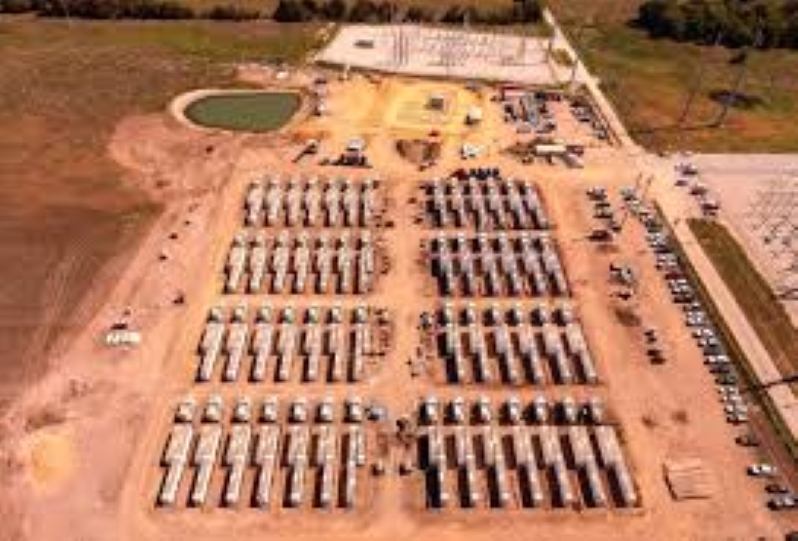
Grid-scale storage is coming on strong now. It's starting to get real. I believe Tesla are part of it, and GE. All it needs is scale-out. Of course, that's the hard part. But the more of it you make, the cheaper it becomes, due to the economies of scale. 86GW is still pretty impressive, if you consider that a standard sized, gas fired power station is around 3GW. Of course the west is way behind China on renewables. But China is also way ahead of the west on coal burning, their whole economy is to a first approximation based on coal, with their CO2 emissions being about 2.5 to 3 times the size of the US CO2 emissions. Despite their large scale investments in renewables, its still only a fairly small part of their energy mix.


The Aussies are getting into grid-scale storage in a big way too.

Of course, it's still only a fraction of total demand. Investment is the key. You're probably never going to get to 100%, which is why you're always going to need some nukes and some fossil fuel in the mix. But the opportunity in countries like the US, north africa and aussie is just sitting there waiting to be developed, IMHO; they've got the land area and the right climate. I think sooner or later it's going to happen, unless we get something like fusion first.
 
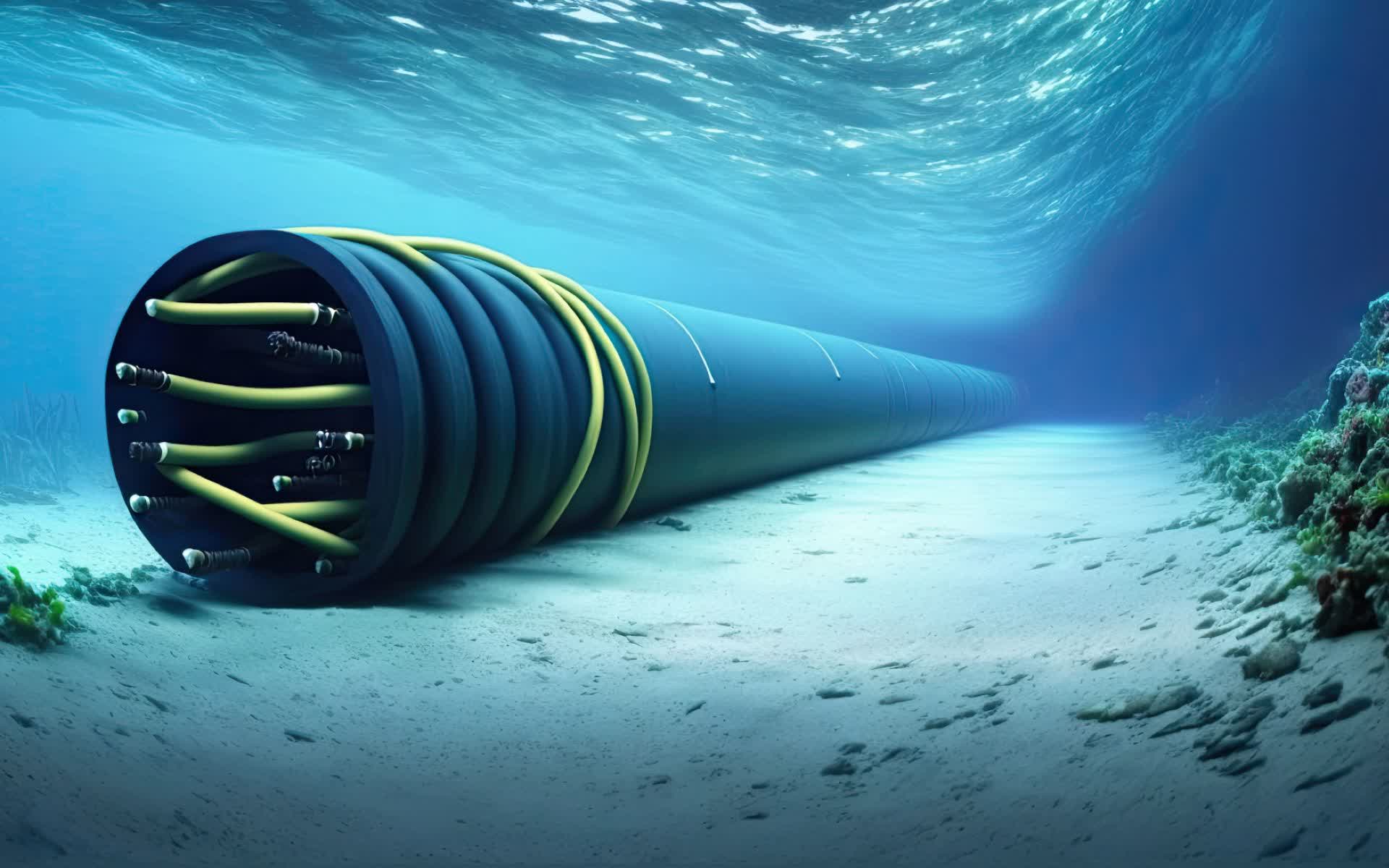
This was a highly ambitious project which would have been a fantastic thing to accomplish, and would have put the UK back into the serious engineering game. Sadly the government terminated the studies as being not viable. The idea was to have solar generation in morocco, and wind/nuclear generation in the UK, linked by a HVDC interconnector to share the load between the two countries. A visionary project, and once shown feasible, a potential pilot for other similar projects. Sadly someone decided not viable at the present time. Perhaps in future it may be revisited. It took about 200 years before the tunnel under the English channel was built, from the time of the original proposal. Perhaps in 100 years time this kind of project will look more realistic. I hope the team behind it manages to find some success, it's good to see some ambition.

 
On Mars. Remember, Mars immediately returns used-up energy.

(For the non-German speakers: Old TV commercials from the 1960s: Mars bringt verbrauchte Energie sofort zurueck. It's talking about a chocolate candy bar.)

Serious answer: Batteries. There is an enormous upswing of Lithium batteries being deployed in the grid, both in large facilities of hundreds of MWh, and at homes. Some of the large facilities have spectacularly exploded, which makes for very beautiful fireworks, and great YouTube videos. The reports of homes burning down tend to get less attention.

Note that the "serious answer" is mostly sarcasm. Of all ways of storing energy, Lithium batteries are among the worst from an environmental viewpoint. But it's what's available right now, and what people who make those batteries (Hi Elon!) make money on.
 
Lithium is a risky material to use, as I remember from dropping cubes of it into water in my school chemistry lessons and enjoying the spontaneous combustions. There are some other chemistries being developed specifically for grid storage, but lithium remains the mainstream at present, manufacturing is geared up to using it. However there are some pilot projects trying out new battery techs, like this vanadium flow battery project down under (if it's real), I don't think this is the only one. I seem to remember NASA were looking at new types of batteries for grid storage too. I'm sure companies like CATL are researching the area.

A study surveying the most promising technologies is here https://advanced.onlinelibrary.wiley.com/doi/10.1002/adma.202516590
And of course there are the other hardy perennials... pumped hydro and gravity stores, and probably others.
 
Back on topic what about energy storage. Are these satellites always going to be generating power via panels?
I have already calling BS on that one. Not happening with panels alone.. Even if you reached 50% efficiency of cells.
There is no dark period at all?

Grid-scale storage is coming on strong now. It's starting to get real. I believe Tesla are part of it, and GE. All it needs is scale-out. O
ERCOT in Texas can't handle the grid load now so they are building some big datcenter right in the gas patch area of West Texas.
So no super transmission lines needed. Natural Gas Powered Turbines. Power generated onsite at the wellhead.
Problem is GE is backed up on these turbines. ramping up. Because GE is partner now they get dibs on turbines orders. Pushing others down the list.
Sorry it was Chevron who partnered with Microsoft and Chevron had turbines on order already so Microsoft jumped the line.
Got Chevrons Turbine orders that had in been the order que.
 
Back on topic what about energy storage. Are these satellites always going to be generating power via panels?
Yes, they can be. Read up on sun-synchronous orbit. You can arrange it so a satellite is always in the sun, never in the shadow of the earth, but still in a low orbit.

However, most low- or medium-orbit satellites are in the shadow of the earth for about 1/3 to 1/2 of the time. But orbits are pretty fast (about 90-100 minutes), so if you want to keep the satellites going, they only need to store energy for about 45 minutes.

Also note that solar cells receive more light in space (no atmospheric filtering), and even at lower efficiency produce more output. They can also be extremely thin and light, since they don't have to deal with wind, rain, birds, or dust. Power supply is not the problem in space. Cooling, on the other hand, is.
 
You don't need to use lithium for energy storage. You need that when you have weight to factor in. You can use natrium as well, but the battery is heavier for the same charge. You can also use rubble for storage, as one test project showed. One warehouse full of rubble which is heated to some 100 degrees, and when you pump air trough the gaps you drive a turbine to regain that energy. There is not even a fire hazard, but this is very slow to pick up load so you need something else also. But the biggest problem to solve is not an engineering problem. It is the problem that some people don't want this shift. Some people who are willing to push the rest under the bus for their benefit.

Phishfry That space dust? That is what space maid from spaceballs was for, yes?
 
So the biggest thing that I can think of in orbit right now is the ISS. According to this page, "8 solar arrays provide 75 to 90 kilowatts of power" to power the whole of the ISS.

While according to this page https://www.hanwhadatacenters.com/blog/what-are-the-power-requirements-for-ai-data-centers/
"Power for AI data centers is driving unprecedented infrastructure transformation, with facilities requiring 50-150 kilowatts per rack compared to traditional 10-15 kilowatts."

So let's assume 100 kW per rack, for the sake of argument.

Which sounds like the entire power output of the ISS is just about enough to run the terrestrial equivalent of ONE RACK of AI compute. Of course you then have to multiply that number by hundreds or thousands of racks to get equivalence to a real surface data center.

Or to put it another way, if you wanted your orbiting data center to do the same amount of work as a 100-rack ground-based data center, you would have to reduce the power consumption of the compute tech on the satellite by a factor of 100, essentially so that 1kW of power in the orbiting system can do the equivalent AI work to 100 kW in the ground-based system. AFAIK, there is no such technology. Although I wonder what happens to your in-orbit power consumption if you make the spacecraft very cold, perhaps then you can exploit superconductivity in some way and reduce your total power requirements, but I'm just speculating. Superconducting, 3d-lithography, ultra-lower power circuits. I assume that's a fantasy at the present time.

It doesn't add up. So how are investors even thinking that a data center in space is achievable? Who did the feasiblity studies? There has to be something we're missing.
 
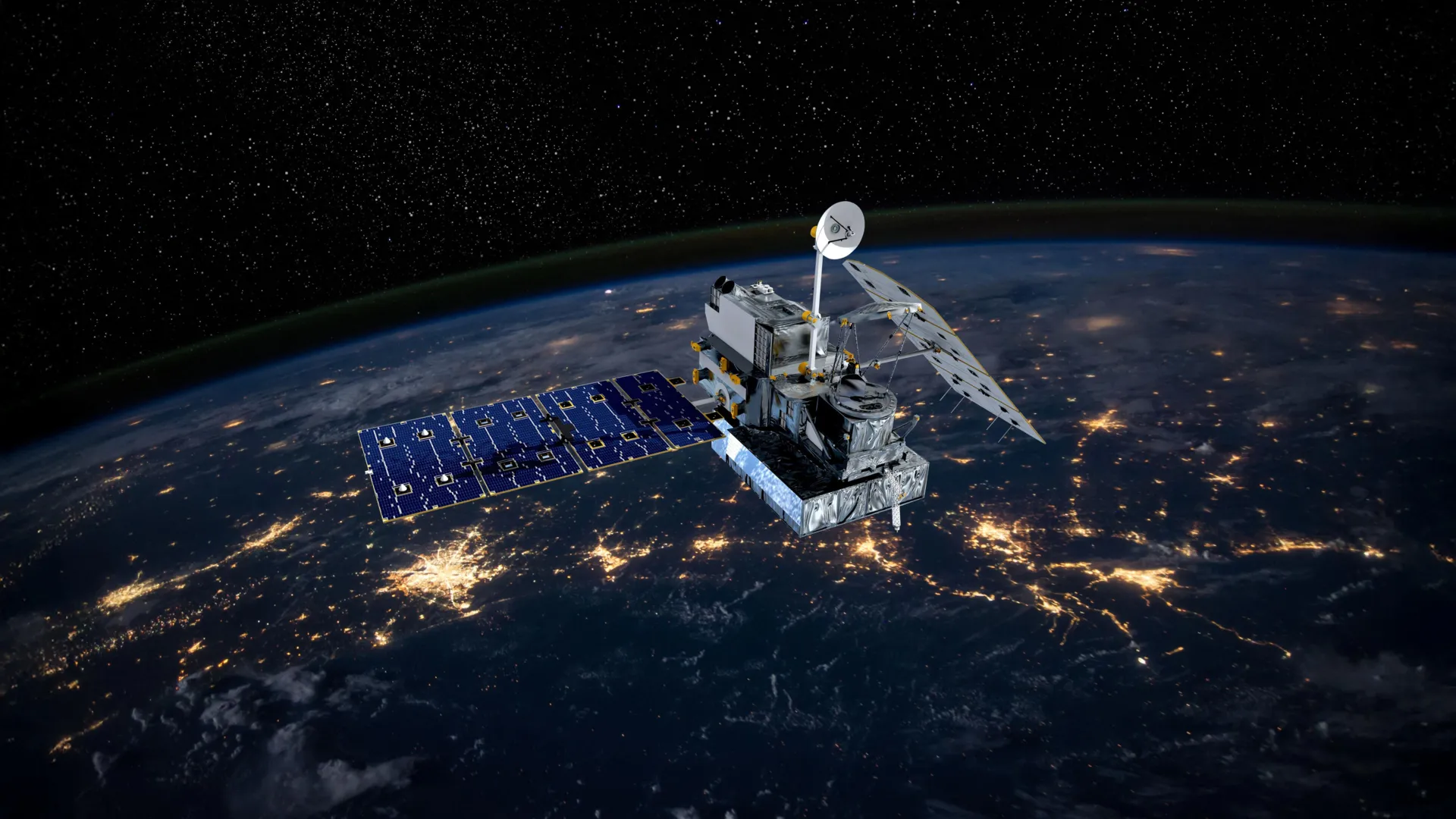
OK, the actual feasibility study appears to be this, from space-x https://www.tomshardware.com/tech-industry/spacex-details-its-ai1-compute-satellite

"Elon Musk's first-gen orbital data center craft spans wider than a Boeing 747 and runs an interchangeable chip payload — AI1 satellite compute payload is 120 kW, peaks at 150 kW". So it's around the same order of magnitude as the power output of the ISS.

Meanwhile, science daily says "However, this satellite is 100 to 1,000 times less capable than current Earth-based data centers. "
They speculate that data centers in orbit will primarily be used for dedicated space applications.

So, it's not going to replace surface data centers any time soon. What gets put into orbit will be low-capacity, special purpose. Like, for example, real-time, AI surveillance of the surface, perhaps, taking input from a large number of orbiting eyes. Perhaps you could watch everything happening in whole countries, continuously in realtime, and have the local in-orbit AI digest the data and tell you what's going on. Hmm, what does that remind me of... part of an updated version of SDI, perhaps? I'm just guessing, of course.

And, just to add a little realism into this perspective, Masayoshi Son of Softbank dismissed the whole proposal as uneconomic.
 
you would have to reduce the power consumption of the compute tech on the satellite by a factor of 100
I keep hearing this argument.

Question: If you could do this wouldn't you do it on earth? Some magical mystical AI chip that is low power.
 
Maybe there's something about space that lets you do that, that isn't feasible on the earth's surface. Something that only works in zero-G, or at cold temps. Something we don't know about. High temperature superconductors work at 150 K.
In space, you might be able to do that at minimal cost, with the right design. I'm guessing that Elon has a lot of smart guys working for him who know a lot more about what is possible than we do as laymen; after all, he runs a space company.

But yes, of course, if you could get the low power envelope on earth, why wouldn't you do it down here.
 
Yes out of box thinking required.

My though was we can harness power from sunlight but we really need to harness darkness.
 
Well, how about putting something like this, in orbit, if you can develop the technology to manufacture it.
They think superconducting computers will allow them will not only shrink the power consumption, but also the physical size. It's pretty cold in space, once you're shielded from the sunlight. Yes, maybe the secret is harnessing the darkness. And all kinds of effects can happen in zero-G as well, that are not possible at the earth's surface.

So, you run a pilot project now, using today's technology, and put a small AI system, perhaps equivalent to one AI rack, up there, and solve the problems associated with doing that. In parallel you work on developing high temperature superconducting semiconductors and photonics, along the lines of the IMEC proposals. Once you have the launch and servicing systems mature and have proved the concept, you work on increasing the AI compute density in orbit, and trial the superconducting technology.
 
They speculate that data centers in orbit will primarily be used for dedicated space applications.
Which seems logical. Some space telescopes probably require huge bandwidth. Get too many and overwhelm systems.
Solution. Process stream in space with AI Datacenter and only relay to earth what is found. Pre-processing streams. Using reactors.

Elon has been promising Full Self Driving and charging alot of money for the feature that is insufficient.. His credibility is very weak.
 
Self-driving is a very tough nut to crack. Yes, they've all failed miserably so far, thankfully. I don't want a car without a steering wheel, thank you.
 
Back
Top