What is the future of FreeBSD?

i try many open source system before.
here are my history.

manjaro : no bluetooth ; need to install ibus and get auto-work.
zorin: no bluetooth; need to compile wifi source with git make and bulabulabula command. Chinese-input-application is auto-working if set it into Chinese mode at installing stage.
cachyos: no bluetooth ; no wifi ; it will be ok when upgrade to linux kernel 7.1 or 7.2.
endeavouros: the same to cachyos.
fedora: i don't test in this mini-PC.but Chinese-input-application sometimes can not work that i don't know what happened. sometimes , the system are not so stable.
slackware/salix : not support so many new hardware and have no success with Chinese-input-application.
Q4OS: similar with zorin, and need to install Chinese-input-application by myself. some version , it be no auto-working.
debian : similar with zorin. but 1/3 times , it need set something to get Chinese-input-application working.
ghostbsd/freebsd: no wifi , no bluetooth. need to set Chinese-input-application with command.
haiku: Chinese-input-application work ; no wifi ,no bluetooth, no GPU.
openbsd/netbsd: it get similar openbox sutff if you set it in installing progress. so pain, they are few support many new hardware.

there are many open source systems.
most of them are research-oriented or for professional.
 
Is there any FreeBSD org community portal? I think that should be part of the future. Don't let it be mailing lists, forums and social media only. Some more encouraging communication channels would be an improvement. They could be a tiny bit commercial. Not for-profit but supporting a default live communication network to encourage cooperation and improvements. Quite sure there are plenty of methods to make it both secure and a world component. All users could optionally communicate and share knowledge if they are running FreeBSD. There will be spam but in exchange users can contact directly without depending on a website or centralized communication service. Bad content can be filtered or blacklisted. IRC is still legal, so this as well...
 
So you only need one communication channel.
Actually, more than one. One for kernel developers, one for port developers, one for users and that might be it. The rest are just idle chit chat and time wasters--like reddit.
Category tree, option for private link, key exchange system, encryption layers, groups, invitation-based entry. User validation or rejection could be a democratic system to rule out abuse.
 
We are the borg of systemd. Resistance i futile.
I beg to disagree. This reminds me the typical "use systemd or else...", which is the one and only "argument" systemd lovers have. It basically says use systemd or get a PDP-11.
Even though systemd plagued the Linux world, there are systemd-free options even on Linux. And you don't sacrifice anything taking such an option.

Wayland is the future.
No it is not. It was just a "new" thing that still can't prove itself, even 17 years later.

As long KDE remains an option, I couldn't care less. I will just never use it. Not only it flirts with systemd infection, it also devours resources for nothing - not even visuals. But the day FreeBSD adopts anything resembling systemd or Wayland will be the last day I used FreeBSD. I just think that day will never come.
 
well, not bad.

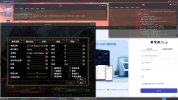
the game “Grim Dawn” and the Erp system are working well with wine.

so, in fact, ghostbsd display the potential of freebsd.

and, will freebsd be slackware or debian?
 

Attachments

  • mmexport1778238110064.jpg
    mmexport1778238110064.jpg
    295 KB · Views: 37
I beg to disagree. This reminds me the typical "use systemd or else...", which is the one and only "argument" systemd lovers have. It basically says use systemd or get a PDP-11.
Even though systemd plagued the Linux world, there are systemd-free options even on Linux. And you don't sacrifice anything taking such an option.


No it is not. It was just a "new" thing that still can't prove itself, even 17 years later.

As long KDE remains an option, I couldn't care less. I will just never use it. Not only it flirts with systemd infection, it also devours resources for nothing - not even visuals. But the day FreeBSD adopts anything resembling systemd or Wayland will be the last day I used FreeBSD. I just think that day will never come.
Well, systemd already made Gnome (49+) mostly no-go on systemd-free distros/OSes.

There are ways around it, but it's clear the writing is on the wall. If you want gnome you better have a systemd capable distro/OS.
 
Well, systemd already made Gnome (49+) mostly no-go on systemd-free distros/OSes.

There are ways around it, but it's clear the writing is on the wall. If you want gnome you better have a systemd capable distro/OS.
Can't see the logic of that. Which of those Gnome components need what files or devices to exist?
Same for systemd. Are there any binary programs involved? I'm no linux user but what's a significant difference between linux systemd and FreeBSD rc.d? Both are overcomplex but optional defaulty configuration frameworks with limited transparency, in my opinion. I have no idea what's different about systemd that it triggers so many discussions while there isn't around rc.d.
 
I'm running , FreeBSD (rc) , Redcore-linux (openrc), Artix-linux (openrc).
All are more or less the same "init" starts very simple "rc" scripts.
Systemd is a compeletely very different beasts. It integrated with everything, requires libsystemd. Restart services automatic.
Future, the kde login manager will require systemd (not kde itself).
Even virtual terminals on linux will require systemd.
But FreeBSD, distro's like MX-Linux ,Artix-Linux, Redcore-Linux will go around it.
 
I'm running , FreeBSD (rc) , Redcore-linux (openrc), Artix-linux (openrc).
All are more or less the same "init" starts very simple "rc" scripts.
Systemd is a compeletely very different beasts. It integrated with everything, requires libsystemd. Restart services automatic.
Future, the kde login manager will require systemd (not kde itself).
Even virtual terminals on linux will require systemd.
But FreeBSD, distro's like MX-Linux ,Artix-Linux, Redcore-Linux will go around it.
These distros will go around it until they don't. We are talking about distros which are made by people on their free time. If the personal cost of maintenance becomes too high my bet is that the maintainers will stop working on that. If enough maintainers leave a distro, it's dead.
FreeBSD has a non negligible user base and has a lot of work done on minimizing the amount of work, i.e. adaptations, by the way of the LinuxKPI and "linuxlator". It's users are more likely to be able to submit patches to upstream to get something to work. But that does not guarantee that said patches are accepted and that there will be someone to unbreak something on the future (i.e. the number of outdated and/or without maintainer ports).
So imagine that KDE, for something other the login manager, starts depending on systemd, my bet is that someone will work around that at start, but just like PLM not accepting patches to support systemd-free distros/OSes, at some point the options will be:
  • Use systemd, not realistic
  • keep the last supported version. Sure, that will also work until it doesn't
  • Drop the software
Let me make it clear, that I don't see anything wrong with what these projects are doing, they want to do something and see that this is the best solution to achieve what they want (be it, flatpaks, oci containers, snaps, systemd, wayland, etc). The thing about OSS is that people are free to do what they want on their own time.
 
Trust me any Artix-Linux , MX-Linux, Redcore-Linux maintainers have lots of willingness.
There is even Devuan ...
I use NixOS, no needs for flatpaks,containers,snap...
 
Neither. Its not a distribution but an entire OS. It holds all the cards and can't be pulled around by all the little projects that make it up.

However, smaller distributions (like GhostBSD) can certainly be made from it.

It is not Slackware or Debian. It is more like Slackware in that Slackware has relatively few users and has spawned a few derivatives, such as Salix. But it is not like Debian: nearly 60% of distributions depend on Debian, and Debian is, in fact, the biggest tree.
 
FreeBSD isn't comparable with Linux distributions. None of those are developed as a complete OS, neither Slackware nor Debian have a ports tree, and of the two, only Debian has dependency resolution and package management comparable to pkg. That's just a few points.

Slackware uses a BSD style init based on sysvinit, but thats probably where the similarity ends.

Regarding gnome - it has been closely coupled to systemd for years now. I recall the Debian gnome maintainers simply closing bug reports where it was found that systemd was not installed. They have no interest in supporting anything but systemd/Linux.

And that's up to them - I personally wouldnt use gnome. It's llike a bad macOS UI reinvention for average joe, aimed at an OS which is usually used by more technical / computer hobbyist people - so a lot of contradictions. The developers have made some interesting comments over the years. The lack of customisation options and binary config, is all intentional, to prevent the appearance and layout from being easily changed by the user. In my view, if there had been any real interest in gnome on other platforms, independent of systemd, it would have been forked years ago.

The other DEs, for all their faults, at least allow this. So if KDE were to go for more systemd entanglement, it's much more likely that could be forked than gnome.
 
FreeBSD is comparible to Redcore-Linux. Everything on my redcore linux kernel, all packages are build from source.
With "flags", just like my poudriere builds.
& No KDE will not have more systemd enganglement except maybe SSDM, to start it.
 
Back
Top