The old computers thread

Recently acquired a G3 iMac in absolute mint condition. It was in a little "museum" at $DAYJOB. They're clearing out because we'll be moving to a different location some time soon. If I had said no, it would have ended up on a landfill, couldn't let that happen.

Those iMacs were popular to buy 10ish years ago as a prop for internet caffe or something in that vein, but it's all gone now.

I have two of Quadras 605 (with Performa model name, forgot which) slim desktop boxes. One doesn't work and needs repair/recap the other is fine. A buddy from vcfed sent me VGA adapter and some floppies, mouse. However the ADB keyboards that I need are too expensive - I'm not paying 100e for keyboard, I paid less for the machine...
 
my first pc was not vintage to be honest but i love it and still own it to this day but sadly it shows its age :(


Dell Precision T3400

Core 2 quad
4 GB of DRR2 RAM
128MB nvidia card ( i do NOT miss this card at all)
600 GB western digital hdd

i used it as my only and main machine till 2025
 
My brother and I got our first PC in 2004; it was a Pentium-S 66 MHz with 16 MB of RAM, a 1.5 GB HDD, and a 1 MB video card. I also started using FreeBSD in 2011 on an IBM machine with a Pentium III 1 GHz processor, 128 MB of SDRAM, a 200 GB HDD, and a 32 MB video card. I used the lightweight LXDE desktop environment and lightweight software packages—for instance, I used AbiWord instead of LibreOffice. I eventually upgraded the RAM to 512 MB and used that computer until 2015; it would have kept running fine, but I moved. It was sufficient for my work needs, including internet access and my specific work applications. I rarely used installation discs because, starting from version 8.2, I could update the system without reinstalling it. I also have a bunch of old laptops with 512 MB of RAM, but I plan to install NetBSD on those.
 
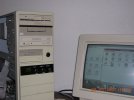
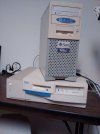
Here are 3 old gents that were near & dear to my heart:
 

Attachments

  • 486dx-33.jpg
    486dx-33.jpg
    270.7 KB · Views: 18
  • sun&IBM.jpg
    sun&IBM.jpg
    497.2 KB · Views: 17
Hey wolffnx, great that you still have the CRT it is the most important item and hardest to acquire now. Does it still have good picture?
Seriously??? Why would someone want to acquire an old CRT Monitor nowadays??? Or am I missing something here? I think I still have one or two around somewhere, so could I really still get any money for that?
 
Seriously??? Why would someone want to acquire an old CRT Monitor nowadays???
You cannot plug a DOS PC into a modern monitor that easily, because the upscaler board doesn't support VGA resolution. They seemingly don't handle anything below VESA (640x480). It is common to plug a HDMI port from late 00s PC into a modern monitor only to have no picture until the Windows or other OS kick the card into VESA modes.

If by any chance you can, the monitor doesn't have right aspect, 4:3 and it will have black margines. And then comes the worst part - LCDs have upscalers in them which are devices that sit on the input stream and transform it into a picture for the LCD matrix - this takes some time. On the actual DOS PC, in a tightly written game, the time between keyboard press and visual result on the monitor is down to 1000s of a second. On the graphics card, there is a device called video generator, that grabs pixels from video memory and generates video signal(s) that drive the monitor at the speed of light. There is no data, no streams or packet standards, only electronic signalling.

Emulators and modern stuff all suffer from this. The accuracy of an emulator is not an issue, the issue is USB HID latency and display latency.

This is all not considering the innate advantages of CRT vs LCD e.g. natural lighting and dimming of the pixels which produces a far stable picture.

Keep in mind, it is not easy to sell a monitor. And it's not actually easy to buy one cheap or get it for free. It's a niche. I'm just saying its cool you still have it, stick to it. Ebay prices can look tempting, but it takes investment to become an ebay seller.

Personally I was left without any CRTs as I didn't see the benefits of sticking to one back then, so I had to regenerate my stash.

I paid around 100 euro plus ship for each of two branded VGA monitors from the late 80s. These are rare, and match the OEM systems.
I paid around 40 euro for a 90s branded VGA monitor - but I had to organize delivery from another city.
I paid nothing for the best of them - a mid 00s 17" SyncMaster with still great picture that can do 800x600 in 100 Hz, a friend had it in a garage ever since upgrading to first LCD.

On top of this you have people that buy 19" but want to end on 21" the best CRTs out there, profi ones, to do actual 2026 gaming on them because the games look better than on anything I've ever seen. LCD is tech for a calculator display not for vivid images.

Then there is a whole category of people buying PVMs, the CRT monitors used in video racks to monitor video feeds, mostly by Sony. These are small, expensive, but they cover almost any video standard out there. Earning gamers mostly use these - I've watched a lot of a guy that does a Super Nintendo game renowed for its speedrunning complexity, 2 frame perfect, pixel perfect tricks. It's not actually possible without a great CRT screen.

 
Seriously??? Why would someone want to acquire an old CRT Monitor nowadays???
:p

images.jpg


LCDs need 400Hz+ (along with higher GPU strain), panel flickering tricks, and expensive OLED to come close to CRT's smoothness and true colors (there's only so many tricks to move liquid faster than an electron beam). I'd buy a CRT today :D

It's similar to VR headsets; gold standard was OLED dual panels 90Hz+, then everyone went with cheap single panel bright LCDs (dimming tricks + 120Hz Q2 doesn't compare to 1st-gen 90Hz Rift CV1)

Edit: Steam Frame was announced and it's LCD 😑
 
Why would someone want to acquire an old CRT Monitor nowadays???
The Apple ][ doesn't actually output a color signal. Woz did some wizardry to get a CRT to produce colored pixels. Looks absolutely horrendous if you connect a "modern" LCD to it. Other systems did tricks as well that only look right on an old school CRT.
 
The Apple ][ doesn't actually output a color signal. Woz did some wizardry to get a CRT to produce colored pixels. Looks absolutely horrendous if you connect a "modern" LCD to it.

Apple II doesn't have RGB based video but uses NTSC colorburst to simulate colour from the YIQ space, very handy trick when you don't have enough memory to describe every pixel in colour and described to death all over Internet.

View: https://www.youtube.com/watch?v=erJLFWQn7rk

Upscalers can yield the right picture tho, simulating the desired effect.

Otoh, my M19 in shown monochrome configuration is difficult to upscale. If you look at video on previous page you can probably discern that it is a CGA text mode, 4 bits/16 colors - however the monitor is monochrome TTL, 2 bits. The card does not actually output TTL compliant signal but pulse width modulation. It is far easier to generate this signal than to process it. Today, there is no device in existence that can ingress M19's high-frequency monochrome signal, upscalers can recognize it as 4 level MDA, losing 3/4 of the color space available. I'm currently making an internal device that will take care of this issue. M19 monitor is standard MDA but it is also a power supply for the computer, so it is not very easy to replace it.
 
My first "real" PC was an IBM-compatible clone:
486 DX4-"100" MHz, 16 MB of RAM
VLB bus, VIA chipset, S3 4 MB graphics card with an empty socket for plug a 4 MB RAM chip
540 MB hard drive
I miss it.
 
Back
Top