SDR Quest: Looking for Software Defined Radios for FreeBSD

I decided to build a dedicated box for SDR Receivers and FreeBSD. What would be your ideal host SDR machine?

Touchpad/Tablet/Laptop with external dongles.

Touchscreen with Internal dongles.

Embedded amd64 Box with internal dongles.

Some Arm64 box with dongles.

Some thing else??

I plan to convert a pair of Nooelec RTL-SDR dongles to internal 4 pin USB header once they arrive. I like the low cost of these dongles.
I wanted a better jack I can bulkhead mount in a chassis..

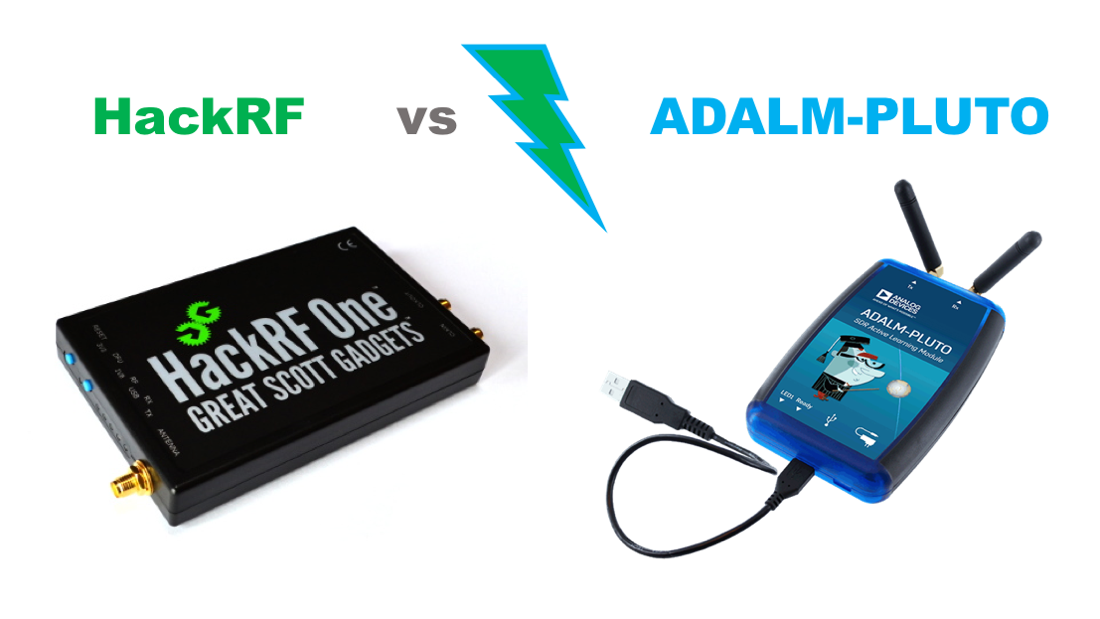
I really have a beef with many of the PLUTO+ design. They have a microSD card slot and a dual core cpu. Reset buttons and all that. An embedded OS?
To me that is a security threat. What OS is on that board? Much like Sierra modems with a snapdragon cpu onboard. Do I trust them?

cubicSDR seems to only work with PulseAudio for output???
Do you copy?
 
I just got back from a survey of the Home Depot looking for antenna parts.
They had 3/8 hard tube bronze but only 24" stick. So I could make a 1/4-Wave Ground Plane antenna for Marine Band as a start.

Must I use tubing for an antenna? Solid aluminum roundbar is cheaper stronger and easier to work..
Extreme version of question. Could you use all-thread for elements? Is stainless OK for material?

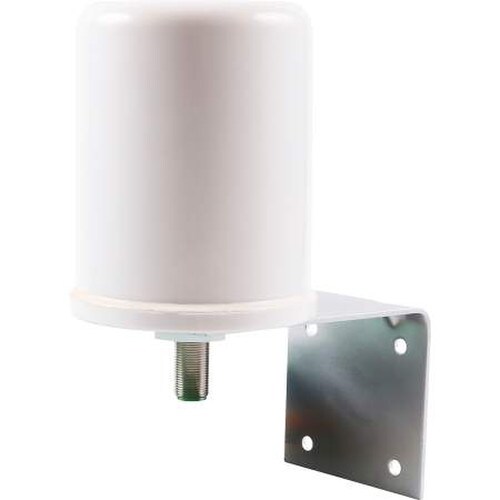
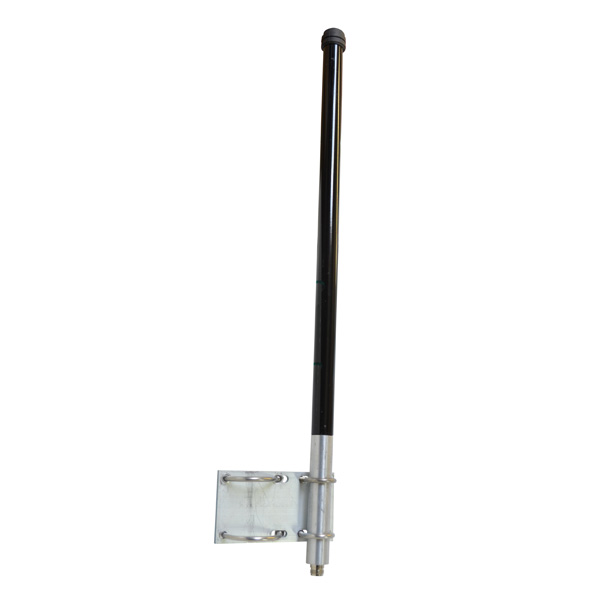
I had these in my used stash. Kinda useless for General Purpose??? One for Cellular Bands and one Wireless.
 
Must I use tubing for an antenna? Solid aluminum roundbar is cheaper stronger and easier to work..
Extreme version of question. Could you use all-thread for elements? Is stainless OK for material?

Aluminum is great, and you can use any type. It's better for the surface to be smooth and uniform, so I would not recommend "all-thread". It sounds like a recipe for distortion at any frequency.
 
I just got back from a survey of the Home Depot looking for antenna parts.
They had 3/8 hard tube bronze but only 24" stick. So I could make a 1/4-Wave Ground Plane antenna for Marine Band as a start.

Must I use tubing for an antenna? Solid aluminum roundbar is cheaper stronger and easier to work..
Extreme version of question. Could you use all-thread for elements? Is stainless OK for material?

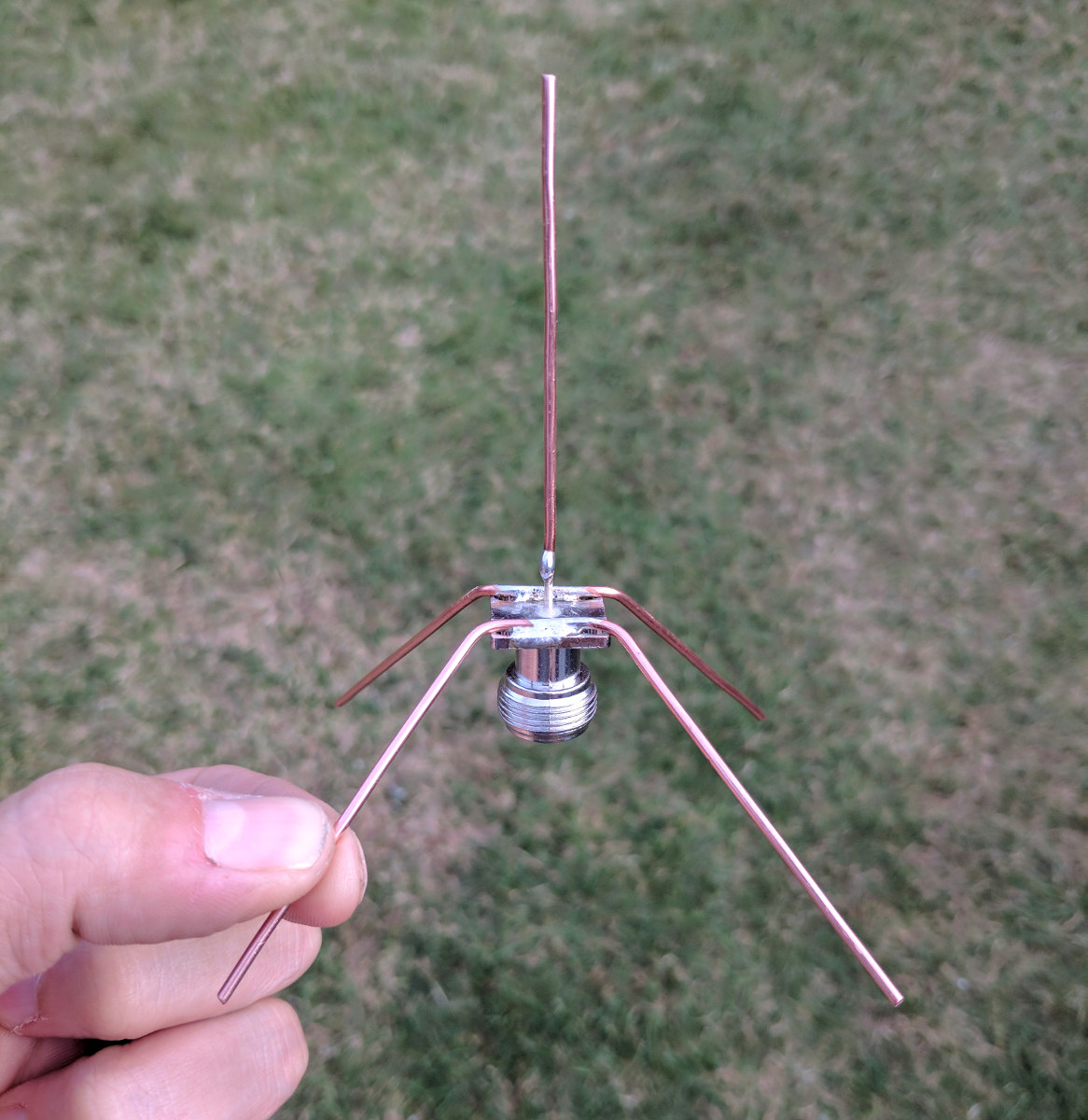
taken from your previous link:

ADS-B_1090MHz_Quarter_Wave_Antenna.jpg


caption said this one is for ADS-B aircraft signals on 1090MHz. you only need the N-Type Amphenol rf socket pair and some spare thick copper wire.
I'd do one of these just for the cuteness factor.
 
I bit the bullet and ordered tube to fix myTV Antenna with plenty left over for SDR HF Antennas.

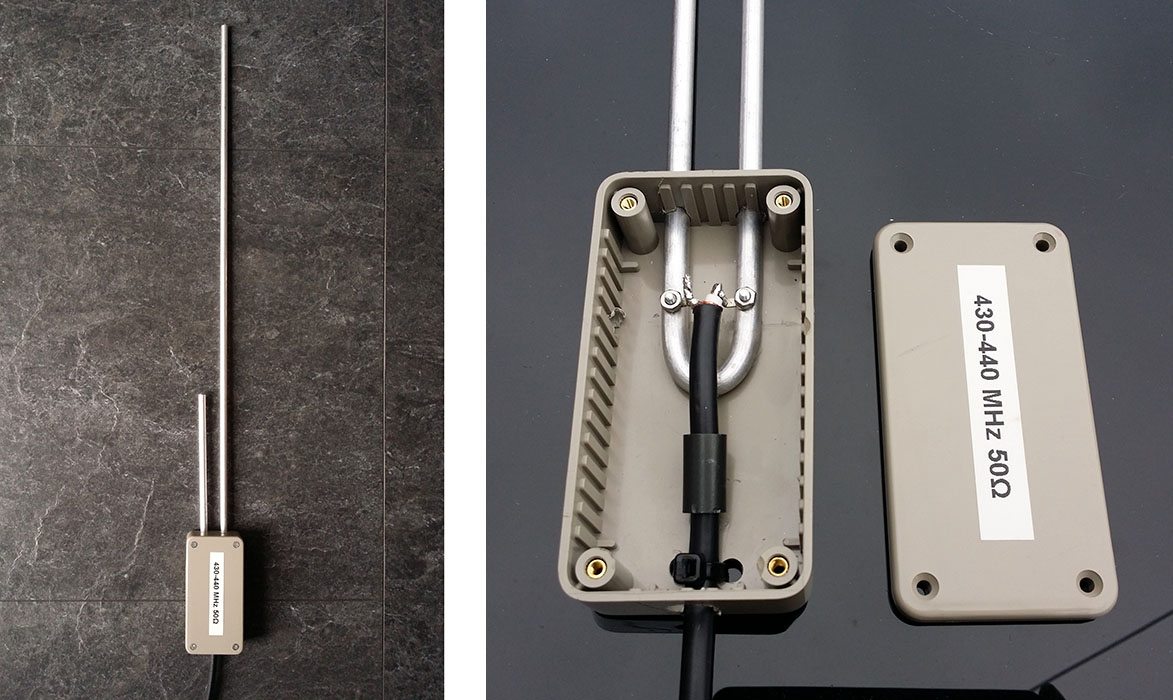
I plan on making a J-Pole Antenna first out of solid 5/16 Aluminum that I had. I like the enclosure approach.
70cm_J_Pole.jpg


VHF is my target. Marine Channel 16 is the hailing frequency. I want to setup SDR++ to record it. 156.8MHz

Antenna Theory website was a nice start.

Since I am concentrating on Receiving Signals the antenna becomes my focus. VHF Channel 16 and adjacent 162Mhz for NWS weather.

I am planning to build a quarter wave ground plane type.
 
I saw I/Q settings in some of the SDR software. gqrx seems to work well with audio output working out of box but I can't seem to get it to record in WAV format. Only RAW.


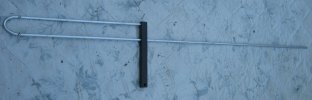
Today I finished my J-Pole Antenna. I need to do the electrical work now. I am going to use an SMA connector instead of N or SO259. Using same concept smaller footprint.
I decided to use the center pin of the SMA Male and jump that to other side of the 'J'. I bought pre-made RG58 cable in 25 & 40ft lengths. Should bolt right up..

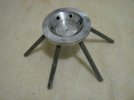
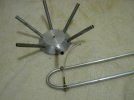
I started on the hub section for my 1/4 wave ground plane antenna. 3/8" thick aluminum with 4 threaded holes for radials. Center hole for connector.
Possibly SMA male connector on this one too.

I was hoping to pickup Ship AIS data but from my reading you need to be very close to shore. Within a mile with an elevated antenna..
 
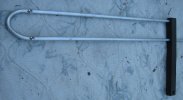
I really hope the calculators were correct. I left everything slightly long so I can trim my first J-Pole antenna for 156.800Mhz. Hopefully it gets 162.550 too.
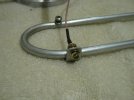
5/16" Aluminum Roundstock with a Delrin mount/stiffner. Two #8-32 S/S screws.
Heated aluminum at marked area with Acetylene only. Once black soot developed I ran to vice with 2" roundbar setup to bend around for a nice radius.
 

Attachments

  • jpole.JPG
    jpole.JPG
    473 KB · Views: 22
  • j-pole.JPG
    j-pole.JPG
    1.2 MB · Views: 24
I really hope the calculators were correct. I left everything slightly long so I can trim my first J-Pole antenna for 156.800Mhz. Hopefully it gets 162.550 too.
5/16" Aluminum Roundstock with a Delrin mount/stiffner. Two #8-32 S/S screws.
Heated aluminum at marked area with Acetylene only. Once black soot developed I ran to vice with 2" roundbar setup to bend around for a nice radius.

Your construction job looks very good. Are you going to tune it by measuring dimensions, or some other technique? I think that you will find for receiving it will do a very good job on both 156.8 and 162.55 MHz. Transmitting would require more attention to the dimensions and tuning.
Good luck!
 
Thanks for your support. I am somewhat doubting I will hear the VHF Marine channels I wanted after more reading.
I want to listen 12 miles offshore and I am 15 miles inland.
That will be a might long way for LOS even if I mounted my Antenna on my 24ft. tower.

We have active offshore maritime with Windfarm construction ongoing.
I was hoping to monitor some of those channels along with fishermen but it looks doubtful.
I already made the J-Pole antenna so I will try it out. I will try and tune it as I went 1/2" long.
NWS Weather is land based so 162.550 is no problem.

I was thinking about trying to build a dual band antenna. 6 radials with 2 different lengths and one mast. Unsure what length to make mast for dual band.
Using a round aluminum hub to mount radials. Making the radials interchangeable to try different lengths. Discone type.

Tonight I got called into work and knocked out what I think it should look like. My ADB-S//1090mhz antenna. Still needing top mast antenna
I also made a little bracket for SMA connector for my J-Pole antenna pickup.
 

Attachments

  • discone-top.JPG
    discone-top.JPG
    954.5 KB · Views: 10
  • antenna3.JPG
    antenna3.JPG
    1 MB · Views: 11
  • pickup.JPG
    pickup.JPG
    974.8 KB · Views: 11
I am sorry to go so far off topic but I think we have established that RTL-SDR and PlutoSDR are both supported. SDR software works but some quirks.
Mostly system audio output.

I know nothing about Antenna's but I am reading alot. Reddit subreddit amateurradio has been great for looking at examples and good mental inputs.

Question about resonance.
I worry with my J-Pole delrin 'stiffener' I may lose resonance. I could easily cut the outside leg and leave just mounting part insulated.

How sensitive is an antenna. It seems to be about vibrations but yet solid roundstock would get less 'vibrations' than tubes right?
I try to think of it like a horned instrument.
When turning solid metal in the lathe it make different noise that tube. Machining Tube sensitive to external inputs like Helicopters noise/chatter.

I am asking this because I am replacing the tubes on my UHF/VHF antenna for DTV. Old Radio Shack Antenna.
Various lengths on the 8 elements. 54" on the two longest. The same tube as used on my discone antenna above.
Would I lose resonance if I stuffed a piece of 7mm plastic rod inside my 3/8" tube for stiffening on my long elements?
The old elements were thinner wall but I have $100 into tubing for this and want to make it rugged yet sensitive.
Plus I don't want to smash the tube ends down. With stiffener inside I can drill straight thru the tube as is.

Perhaps resonance is not the correct term for what I am talking about?
I am very new to radio.

My two v5 RTL-SDR never shipped from ebay so I bought one off Amazon. It did allow me time to buy various cabling. I got mostly RG58 but one deluxe LMR.
I see various external do-dads like "Ham it Up" for the mast. Chokes and LNA.
That might come later in the QUEST. So far cables cost the most but I bought a bunch to experiment with antenna placement. Two longer lengths for my tower.
 
All I remember from my undergrad class about EM field etc. is that for maximum resonance a dipole antenna should be half wavelength (λ/2). Two λ/4 elements connected at the center. A monopole λ/4 antenna for mobile is where the ground plane acts as a "mirror".

You may like this "toy" -- an antenna analyzer among other things! https://www.amazon.com/dp/B085CFHTBM
Also see Jeff Geerlings video with his dad:
View: https://www.youtube.com/watch?v=BA3_jCstp3o
 
I wonder about the pf value used in the Antenna calculators. .95 being commonly used. Is that applicable to both solid and tube material?

Back to earlier advice by waym0re about all-thread for elements.
In my head it seemed like irregular surface with peaks would be better receiver surface than smooth metal.

PCB antennas are interesting. I was thinking of making a multi-element loop antenna and came across a pcb loop antenna design.
 
I wonder about the pf value used in the Antenna calculators. .95 being commonly used. Is that applicable to both solid and tube material?

Back to earlier advice by waym0re about all-thread for elements.
In my head it seemed like irregular surface with peaks would be better receiver surface than smooth metal.

PCB antennas are interesting. I was thinking of making a multi-element loop antenna and came across a pcb loop antenna design.
Yes, this is a bit off topic about SDR software, but here goes:

By "pf" I believe you mean velocity factor which is the velocity of the electromagnetic wavefront in a medium as compared to the speed of light in a vacuum. The wavefront moves slower through a conductor or coax cable compared to a vacuum. 0.95 is a reasonable value for the antenna conductors. In practice this means your 1/4 wavelength conductor will be about 95% of the calculated length. Solid or tube material will not make a measurable difference here.

My experience is that a rough surface vs a smooth surface conductor will not make any measurable difference in your antenna elements. You might look up "skin effect" for RF currents, but this mostly impacts transmitter circuits or grounding.

I would not worry about a delrin stiffener changing your resonance. As long as your antenna is reasonably stiff, vibration should not be an issue either. Installing a plastic rod inside the tubing should not do any harm - do it if it makes you feel better.

Resonance is really more important for antennas that transmit than it is for a receiving antenna. If a transmitting antenna is not resonant, it means there is an impedance mismatch. This will cause some of the transmitted energy to reflect back from the antenna (mismatch) to the transmitter. So things are not as efficient as they could be - not all of your power is radiated from the antenna. At low power levels, say 100 milliwatts, this is hardly a big deal. At the 10 kW level, the reflected power going back into the transmitter may cause damage.

In practice, for a receiving antenna, being off resonance or mismatched is not a big concern. The difference in performance between a resonant and non-resonant antenna for receiving may not even be measurable.

The best advice is to experiment. Build some antennas, measure the dimensions carefully, and then get them up in the air and try them out. For receiving you will learn a lot and should be pleased with your results. A random piece of wire up in the air will always beat the best designed antenna on paper. When it comes to transmitting you will need to pay a bit more attention to tuning the antenna to resonance.

Experiment and have fun!
 
Here is the DTV antenna I am rebuilding. With Coax to SMA adapter could I use it with my RTL-SDR? Is it worth trying? What could I receive?
I would like FM radio to start. Can it do Marine VHF?

Looking here at testing they use a range from 450mhz to 800mhz.
So I could try those?

I am reading about WaveGuide Antennas today. Microwave band..

How can I combine several antenna into one wire from tower?

What about dieelectric grease. Is it Ok on all outdoor antenna connections?
 
Back
Top