SDR Quest: Looking for Software Defined Radios for FreeBSD

Pulling a stunt like that will likely result in getting arrested pretty much anywhere in the world. That said, it's quite frightening how atrocious the security of those systems is.
 
Used mine to pick up ADS-B (aircraft transponders) from aircraft flying overhead.
That is a great usecase. ADS-B . We have alot of little birds around here that are not on flight trackers.

So can you multi-task your SDR? Showing streaming NOAA maps and scanning the sky for birdies?
 
So can you multi-task your SDR?
Don't think that's possible with a single device. Although it could constantly switch frequencies, you're probably going to end up with gaps in the received NOAA picture. It can't listen on two (or more) different frequencies simultaneously. Maybe a more expensive SDR could (multiple receivers, each tuned to a different frequency).
 
I noticed in my reading that GNU-Radio can take multiple inputs.
That makes sense as even though you have a "universal radio" a task suited antennas would be best.


What about "Point to Point" connections. I see the term 'modem' used for SDR radios.
Can I use a pair of SDR devices that can do TX/RX to transfer files between them? xmodem possible? PPP?
How do you connect two SDR base stations without the internet?
 
Don't think that's possible with a single device. Although it could constantly switch frequencies, you're probably going to end up with gaps in the received NOAA picture. It can't listen on two (or more) different frequencies simultaneously. Maybe a more expensive SDR could (multiple receivers, each tuned to a different frequency).
This is correct. The bandwidth of a regular dongle is 2.4 Mhz, so you can capture only a narrow band. The websdr station I linked previously is unique in that it captures a huge range, but at a cost of using a custom FPGA to be able to handle the DSP.
I noticed in my reading that GNU-Radio can take multiple inputs.
That makes sense as even though you have a "universal radio", task suited antennas would be best.


I guess sky facing antennas for both these tasks. Satellites and Birds.
Will I become a target for these little birds for scanning them?

What about "Point to Point" connections. I see the term 'modem' used for SDR radios.
Can I use a pair of SDR devices that can do TX/RX transfer files between them? xmodem possible? PPP?
How do you connect two SDR base stations without the internet?
Most SDR dongles are RX only.

What you seem to be describing is LORA (433 Mhz or 915 Mhz). The most popular options are meshtastic, meshcore or reticular. They typically run on a dedicated ESP32 board, and it's line of site only (meaning you need to physically see the antenna you want to communicate with).

Some devices allow TX, but even the HackRF one one support RX or TX at a time, not both. For a good TX SDR, you're talking thousands, and realistically you need a license for anything more than 2W, and that's for commercial hardware. Non-commercial equipment requires a license even below that (because custom equipment might generate unexpected interference a non-qualified individual might not realize).

Not all dongles are created equal. For example, I have a USB-to-LoRa stick from Waveshare, but it's completely useless since it uses a custom protocol and doesn't support LoRaWAN. If you're doing LoRa, you want LoRaWAN capable dongles.
 
OK I got my Blue DTV stick. It appears in usbconfig:
There is a post on reddit for the same stick from @unitrunker who gives us a devd rule and I used that.

Code:
ugen0.2: <RTL2838 DVB-T Realtek Semiconductor Corp.> at usbus0, cfg=0 md=HOST spd=HIGH (480Mbps) pwr=ON (500mA)

  bLength = 0x0012
  bDescriptorType = 0x0001
  bcdUSB = 0x0200
  bDeviceClass = 0x0000  <Probed by interface class>
  bDeviceSubClass = 0x0000
  bDeviceProtocol = 0x0000
  bMaxPacketSize0 = 0x0040
  idVendor = 0x0bda
  idProduct = 0x2838
  bcdDevice = 0x0100
  iManufacturer = 0x0001  <Realtek>
  iProduct = 0x0002  <RTL2838UHIDIR>
  iSerialNumber = 0x0003  <00000001>
  bNumConfigurations = 0x0001

I Installed ports that seem relevant.
comms/rtl-sdr and comms/gnuradio

Is that what I need for my Blue USB Fob?

rtl-sdr contains an ADB-S program?
 
I couldn't find the adb program I was expecting in /usr/local/bin

I also added more software after some reading. Am I going the right way?
comms/gr-osmosdr For gnu-radio
comms/cubicsdr Another SDR program to checkout.

Concerns: I don't see a /dev/cuau0 device added after inserting stick. I should see a new USB Com device if hotplugging right?
 
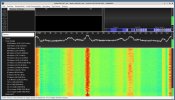
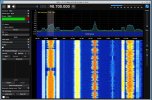
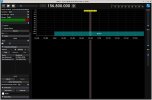
cubicsdr can provide signal waveform but when I launch it complains about SoapySDR missing which I can see in packages via search but I cannot find them to install.

That being soapysdr-rtl or soarysdr. I am need to investigate why.

UPDATE: My bad. I needed to use Caps in the package name.
pkg install SoapyRTLSDR

cubicsdr is now further along asking for device.
 
That fob was a really good deal for $30. I would have never imagined a DVB-T+FM stick would be a SDR. Now that it is working its time to try kismet.
 

Attachments

  • sdr.jpg
    sdr.jpg
    240.5 KB · Views: 8
rtl-sdr contains an ADS-B program?
No I had to use comms/dump1090 for the decoder.
Code:
# dump1090
Found 1 device(s):
0: Realtek, RTL2838UHIDIR, SN: 00000001 (currently selected)
Found Rafael Micro R820T tuner
Max available gain is: 49.60
Setting gain to: 49.60
Exact sample rate is: 2000000.052982 Hz
Gain reported by device: 49.60
*8dab4c4bea05f8ac815f08302366;
CRC: 302366 (ok)
Single bit error fixed, bit 100
DF 17: ADS-B message.
  Capability     : 5 (Level 2+3+4 (DF0,4,5,11,20,21,24,code7 - is on airborne))
  ICAO Address   : ab4c4b
  Extended Squitter  Type: 29
  Extended Squitter  Sub : 2
  Extended Squitter  Name: Unknown
    Unrecognized ME type: 29 subtype: 2

*8dab4c4b5919408dedaf8c5eb76f;
CRC: 5eb76f (ok)
Single bit error fixed, bit 53
DF 17: ADS-B message.
  Capability     : 5 (Level 2+3+4 (DF0,4,5,11,20,21,24,code7 - is on airborne))
  ICAO Address   : ab4c4b
  Extended Squitter  Type: 11
  Extended Squitter  Sub : 1
  Extended Squitter  Name: Airborne Position (Baro Altitude)
    F flag   : even
    T flag   : non-UTC
    Altitude : 3900 feet
    Latitude : 18166 (not decoded)
    Longitude: 110476 (not decoded)

*8dab4c4b9910a31bd844093ba4d5;
CRC: 3ba4d5 (ok)
DF 17: ADS-B message.
  Capability     : 5 (Level 2+3+4 (DF0,4,5,11,20,21,24,code7 - is on airborne))
  ICAO Address   : ab4c4b
  Extended Squitter  Type: 19
  Extended Squitter  Sub : 1
  Extended Squitter  Name: Airborne Velocity
    EW direction      : 0
    EW velocity       : 163
    NS direction      : 0
    NS velocity       : 222
    Vertical rate src : 1
    Vertical rate sign: 1
    Vertical rate     : 17

*02818314f0b84b;
CRC: f0b84b (ok)
DF 0: Short Air-Air Surveillance.
  Altitude       : 3900 feet
  ICAO Address   : ab4c4b

*028183130f686f;
CRC: 0f686f (ok)
DF 0: Short Air-Air Surveillance.
  Altitude       : 3875 feet
  ICAO Address   : ab4c4b

*20000313c6345e;
CRC: c6345e (ok)
DF 4: Surveillance, Altitude Reply.
  Flight Status  : Normal, Airborne
  DR             : 0
  UM             : 0
  Altitude       : 3875 feet
  ICAO Address   : ab4c4b

*20000313c6345e;
CRC: c6345e (ok)
DF 4: Surveillance, Altitude Reply.
  Flight Status  : Normal, Airborne
  DR             : 0
  UM             : 0
  Altitude       : 3875 feet
  ICAO Address   : ab4c4b

*20000313c6345e;
CRC: c6345e (ok)
DF 4: Surveillance, Altitude Reply.
  Flight Status  : Normal, Airborne
  DR             : 0
  UM             : 0
  Altitude       : 3875 feet
  ICAO Address   : ab4c4b

*20000313c6345e;
CRC: c6345e (ok)
DF 4: Surveillance, Altitude Reply.
  Flight Status  : Normal, Airborne
  DR             : 0
  UM             : 0
  Altitude       : 3875 feet
  ICAO Address   : ab4c4b

*20000313c6345e;
CRC: c6345e (ok)
DF 4: Surveillance, Altitude Reply.
  Flight Status  : Normal, Airborne
  DR             : 0
  UM             : 0
  Altitude       : 3875 feet
  ICAO Address   : ab4c4b

*8dab4c4bea05f8ac815f08302366;
CRC: 302366 (ok)
Single bit error fixed, bit 42
DF 17: ADS-B message.
  Capability     : 5 (Level 2+3+4 (DF0,4,5,11,20,21,24,code7 - is on airborne))
  ICAO Address   : ab4c4b
  Extended Squitter  Type: 29
  Extended Squitter  Sub : 2
  Extended Squitter  Name: Unknown
    Unrecognized ME type: 29 subtype: 2

*8dab4c4b59192425b81c19700233;
CRC: 700233 (ok)
Single bit error fixed, bit 73
DF 17: ADS-B message.
  Capability     : 5 (Level 2+3+4 (DF0,4,5,11,20,21,24,code7 - is on airborne))
  ICAO Address   : ab4c4b
  Extended Squitter  Type: 11
  Extended Squitter  Sub : 1
  Extended Squitter  Name: Airborne Position (Baro Altitude)
    F flag   : odd
    T flag   : non-UTC
    Altitude : 3850 feet
    Latitude : 4828 (not decoded)
    Longitude: 7193 (not decoded)

^C

 
What about comms/airspy
I installed it and it has many binaries. I tried these with no luck:
airspy_r820t -n 12 -r
airspy_rx -r /tmp/tmp
Same error message:
You have a rtl-sdr clone. I'm pretty sure those drivers are for airspy branded receivers. If your rtl-sdr driver works, you don't need any other driver. The driver you had working should work with almost any software.
 
I am just wallowing in all the offerings. I have a functioning unit with just small telescoping antenna. I am doing the FM Radio program with GRC.
After that NOAA19 and its video.

I can see antenna work for the future. One for ADS, One for Satellite's and one for 433MHz and so on and so on.

I was trying airspy thinking it was a program like aircrack-ng. Something that would scan for radios and show information.
I am sure aircrack scanning 80211 is easier than scanning and identifying everything on the whole wireless spectrum..

But what exists that can do something similar? How do you scan and ID RF things? I don't want to crack anything just see open things.
Perhaps some recommendation on how to decode it from the software. I know that is asking for alot.

Back to my modem inquiry. I see CubicSDR has a tab labeled MODEM in the upper left. Do this only work with certain devices? Am I missing something?
I still see no USB Comm device yet have a working radio. I am assuming a modem needs RX/TX so this feature is only available on TX capable devices?
I was thinking of getting a pair of SDR devices with RX/TX to use for comms. So I am trying to figure out what is capable.

Most of these devices use USB2 and 500ma. so only so much juice possible.
To boost that you would need linear amp and FCC license?

What is the cheapest RX/TX pair you would consider that works on FreeBSD? The ADI Pluto stuff looks nice but I am unsure if it works on FreeBSD?
 
When I look at alot of the ADI Pluto+ designs they use a baseboard for the SDR that is a freestanding computer. Albeit only 2 core.
That don't seem to be the cheapest design... I really like the M.2 card radio. Use your own Arm board.

Also some boards use AD936[14] instead of AD9363 because of cost?? Clones of the Neptune development kit?
$180 compared to $260+ from what I am sensing...

What is an alternative to the ADI SDR radio chipset that is supported on FreeBSD?

 
Back
Top