Just for my own clarification, can someone explain how all the functions refer to each other since I'm not clear how to identify an individual host or its location.
I notice that FreeBSD does not include nslookup. Why is that? What to use...
Turns out I haven't got relay_domains set - using virtual_alias_domains instead! Once I pointed fast_flush_domains to that it worked!
Thanks for all your help.
I would note that on this public forums, all of our words are going through an AI system anyway, likely multiple.
The important bit is which end its going in and which end its coming out.
Every page it processes, it becomes a little less fun at...
Indeed. I think that proposal is for a rollback.
https://thephd.dev/c2y-the-defer-technical-specification-its-time-go-go-go
Hopefully not too difficult for compiler vendors to implement. Time will tell!
In many cases, if a function is fully successful, you don't want cleanup. You return the newly allocated memory / resource as well as the other allocations underpinning it. Whereas a defer would incorrectly clean it up, even on success leading to...
Goto in C++ is rarely needed. Instead RAII should "undo" memory / resources allocated for unhealthy codepaths.
However for C, it can help to avoid a lot of repetitive (and thus potentially erroneous) code. For example in a function that...
balanga You're talking about creating an MCP server. There are many online resources and likely some working open source implementations out there.
For example, https://github.com/executeautomation/mcp-database-server
Well not only to jump to a cleanup section, but to a place where many jumps converge, forward or backward.
It seems these trivial things are not clear to those that never programmed something like FORTRAN / assembler.
It's not because you (and the compiler) know that the goto does not jump to e.g. another function, or backwards, or other nasty things.
Also, at least in the Common Lisp version of this you can return a value from such a block.
To bad the guests are not running FreeBSD 15.0.
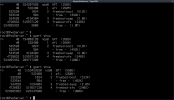
Just tested in a 15.0-RELEASE bhyve guest (on a 15.0 host). A increase in disk size (truncate), while the vm is running, is picked up immediately:
Chris I. , FreeBSD developers familiar with...
I am trying to setup my laptop with FreeBSD so I can work while I am away from home. I have FreeBSD 14.3 (before 14.2), and installed in VirtualBox Windows 10 for setup my Fortinet VPN. Everything work fines except for the slowness of windows, so...
To bad the guests are not running FreeBSD 15.0.
Just tested in a 15.0-RELEASE bhyve guest (on a 15.0 host). A increase in disk size (truncate), while the vm is running, is picked up immediately:
Chris I. , FreeBSD developers familiar with...
If I'm understanding it correctly, FreeBSD 15 works like Linux according to this:
https://www.freebsd.org/releases/15.0R/relnotes/#storage-general
It says: "Add support for dynamically resizing NVMe namespaces. The nvd(4) and nda(4) drivers now...
Sure, all you have to do is have a special block with a name and then do a "break" or "return" with that name.
http://www.ai.mit.edu/projects/iiip/doc/CommonLISP/HyperSpec/Body/speope_return-from.html
I haven't tried this myself, so YMMV, on the off chance that it's not out of date or wrong, the handbook does talk about this and explicitly notes how to do it without unmounting. I can't even find information on the -e switch, so this may very...
One of that constructs is break, but for only one level.
There are of course choices, but makes the flow more complicated.
Is there such a construct as general and simple as goto?
In C you have no real choice. You need goto to jump out of nested loops and you need it to skip to a cleanup section at the end of a function.
Both would be easily avoided with language constructs but alas they are not.
I don't think that geom is provisioned for resizing out of the blue at all. I find it interesting that nvmecontrol can see the new size, good find. I'll put it on the TODO to snoop a little.
You all never heard of the "please come from" statement...
When writing compilers, you learn to really hate goto statements. They produce one hell of flow graphs and make it hard to use elegant and fast algorithms for register allocation, loop...
I think you saw this link: https://wiki.freebsd.org/arm/Raspberry%20Pi
In my experience, everything will work slowly.
Especially if you try to build a port on it.
It is ctrl + left btn to get the main menu and ctrl + right to get the fonts menu. Fullscreen option is in main menu.
Screenshot of what?
Hinted fullscreen does not work without a WM. I am merely pointing to XTerm to try that out for yourselves...
What does this gives ?
- To the left you see a tree of your directory and files, which you can open.
- On top you have a bar with different files you opened
- There is a fuzzy finder to find files
- On bottom there is a statusline
- To the right...
You already have a window manager or some UI-related programrunning? My xterm does a text selection from the top to mouse-y on a right-click. There's also still the 'legacy' X11 menu that appears when control is pressed down while clicking on it...
To everyone that doesn't understand what's going on,
Execute startx /usr/local/bin/xterm
You can clearly see the default window geometry on the black background.
Right click on xterm and select fullscreen. What do you get?
What version of FreeBSD?
While the FreeBSD kernel certainly is a monolithic kernel, dynamically loadable modules exist for a reason.
You don't need to build it yourself. It's already built.
1) gotos are 100% avoidable, and hence not the only way.
2) From the point of view off efficiency, they are probably better code.
3) Where "while" and "for" are natural, better to use them.
4) better a "goto" than forced "while" or "for" with...
Sure, but in many a case where I see a goto I see that it is not needed and, in fact, produce worse code. There are places a goto is the only way, but it is a tool. You can not hand any tool to everybody and expect them to be equally skilled with...
This site uses cookies to help personalise content, tailor your experience and to keep you logged in if you register.
By continuing to use this site, you are consenting to our use of cookies.