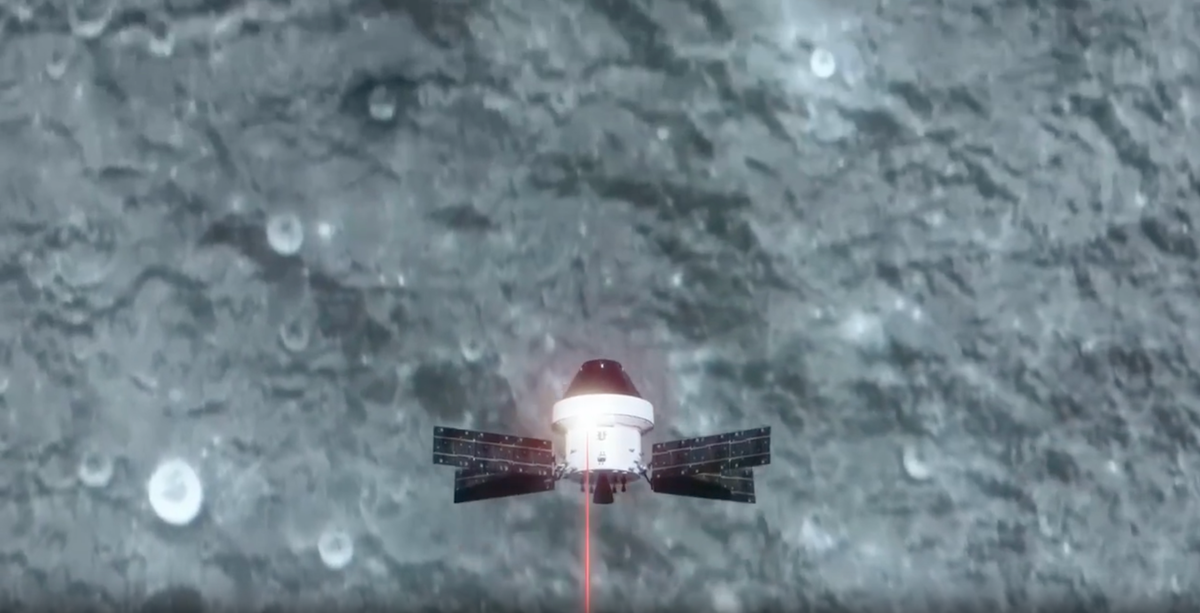
Artemis II computer systems.

A little light reading on the computer systems in Artemis II, just back from flying out past the moon. These articles are very high level, they don't reveal much low-level detail. This is just for interest. Hopefully in time more detailed articles will be published.

From the ACM article:-
"A faulty computer will fail silent, rather than transmit the ‘wrong answer,’” Uitenbroek explained. This approach simplifies the complex task of the triplex “voting” mechanism that compares results. Instead of comparing three answers to find a majority, the system uses a priority-ordered source selection algorithm among healthy channels that haven’t failed-silent. It picks the output from the first available FCM in the priority list; if that module has gone silent due to a fault, it moves to the second, third, or fourth."

The fail silent system is an interesting departure from the more normally used "voting set" cluster design; it would be interesting to know some more details about how that works.
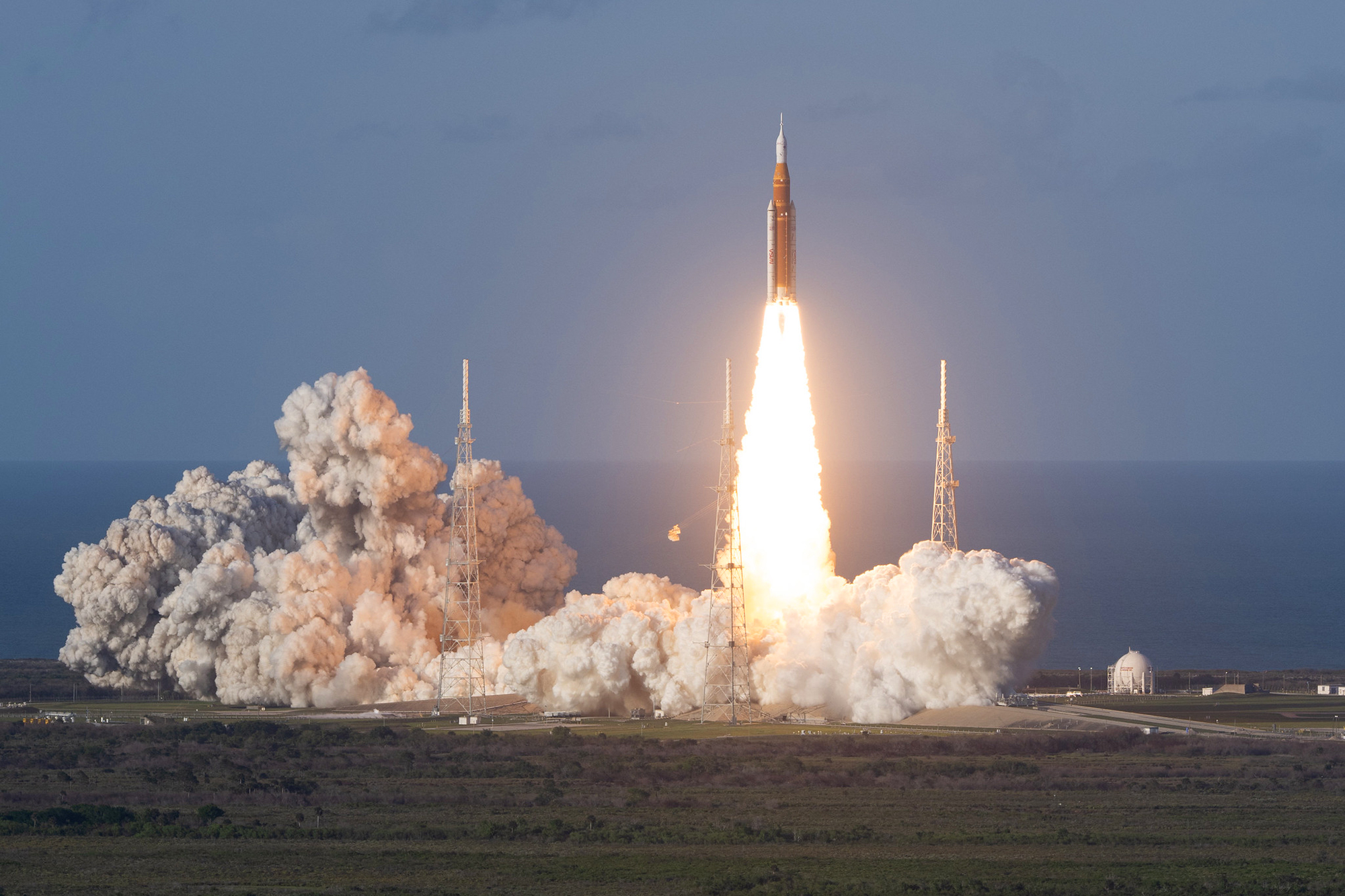
 
And some info on the infrared laser comms system that was used between the orion capsule and earth, which allowed them to beam high resolution videos up to 4K from the moon to earth, a remarkable achievement.

The video below shows them orienting the spacecraft to line up with the receiving station to establish the optical comms link.
View: https://www.youtube.com/watch?v=QWzy1k-pSl8
 
They better have an odd number of computer units.
From the ACM:
"Orion utilizes two Vehicle Management Computers, each containing two Flight Control Modules, for a total of four FCMs. But the redundancy goes even deeper: each FCM consists of a self-checking pair of processors.

Effectively, eight CPUs run the flight software in parallel. The engineering philosophy hinges on a “fail-silent” design. The self-checking pairs ensure that if a CPU performs an erroneous calculation due to a radiation event, the error is detected immediately and the system responds."

It doesn't really go into a lot of detail, which is a shame, perhaps some papers will be published on it later. I asume the self-checking pairs are the usual thing of two cpu's both running the same program and some differencing hardware watching to see if they get the same result as each opcode (or whatever checkpoints they use) is executed. So if a stray high-energy particle flips a bit in one of the cpu's, a difference is noted and presumably that is the point at which that FCM goes silent. Then they have redundant pairs of FCM's to failover to. But I'm just guessing from what I've read. It would be interesting to learn some more detail about it, just to satisfy my curiosity.:-)

I am wondering what processors they used, it must be something rad hard, which would tend to point to something older. I think I read elsewhere that this spacecraft uses powerpc 750's because of rad hardness, but I could be wrong. They obviously do have modern chips inside the tablets and smartphones they had in the capsule, although that is inside a radiation sheild.

The whole mission is an absolute tech 'tour de force'; sending them out there, bringing them back unharmed... incredible.
 
They said something like the computers they run are "75,000" faster than they had on the Apollos, which is not a whole lot fast. But you don't need a supercomputer for a flight computer.

Hmmm, now I wonder what happens if half of the computers say one thing and another half says another. (Unlikely as it is to happen)
 
If its using powerpc 750's, it may be this RAD750 cpu from BAE:
Those were used in the Perseverence mars rover, according to engadget: https://www.engadget.com/nasa-perseverance-powerpc-750-171516292.html
I can't find the link I read that I thought said they were used in artemis... so I may be wrong about this, perhaps it uses something else.

If it is using those... I'm not sure about 75000 times faster than the AGC, which was supposedly 1 MHz cpu.. that would make it clocked at 75GHz! But still, there's all kinds of news stories going around. 😁
If they are used to building systems based around that chip, it would make sense if they've used it on this mission too, provided it has enough compute power. The datasheet suggests there is a whole family of processors derived from that chip, so they likely have more powerful versions. Well, it's good to see powerpc still being used for something.

I wonder what operating system it runs? They probably have something custom-written for that kind of project, probably nothing off the shelf.
 
Back
Top