BSD family of licenses and consumer rights

Under no circumstances can the inclusion of a copyrighted BSD project used as advertisment/representation for the new project - the new project can be proprietary or totally free, no representation is allowed unless explicitly allowed by contacting the copyright holder.
The FTC doesn't care only for advertisements. Read the FTC policy statements on unfairness and deception. A representation can be either express or implied. And the reasonableness is verified from the perspective of the targeted group. A representation is misleading if this is likely to influence the consumer acting reasonably under the circumstances. There's no requirement for an act or practice to cause actual deception. Moreover, deception is classified as an unfair method of competition.

Even if millions of licensees don't believe they're misled, the FTC can potentially frame the act of omitting source code as deceptive.
 
but obviously SONY is not selling the PlayStation with a contract that stipulates "use in source form", because BSD license does not apply to the PlayStation as a product. The BSD license grants permissions to SONY for using the BSD code inside the PlayStation product, only if they meet some conditions. It is a license and not a contract, and it is between SONY and the authors and contributors of BSD code, not with the users of the product.
This isn't what PROCON's told me. I was told a purchase is a binding contract, and this isn't different in US.
 
Post the exact, and entire, responses you got. And a case number. Until then I'm going to take everything you claim with a grain of salt. Because nothing you have said here can be verified.
 
This isn't what PROCON's told me. I was told a purchase is a binding contract, and this isn't different in US.
This is the EULA between SONY and a buyer of PlayStation 4. In the restriction section

You may not lease, rent, sublicense, publish, modify, patch, adapt or translate System Software. You may not reverse engineer, decompile or disassemble System Software, create System Software derivative works, or attempt to create System Software source code from its object code.

so it is completely different from BSD license.

In the LICENSE GRANT section they tell that they reserve all rights:
All use of or access to System Software is subject to this Agreement's terms and applicable intellectual property laws. Except as this Agreement expressly grants, SIE Inc and its licensors reserve all rights in System Software.
.

And then they mention (indirectly) the BSD license:

Certain license terms for SIE Inc-licensed, third-party software or service may require that SIE Inc provide you with notices and license terms for that third-party software or service. These notices and license terms are available to you at https://doc.dl.playstation.net/doc/ps4-oss/ or any other place which SIE Inc thinks appropriate.

If you open the link, you see all the OSS software used by SONY, with proper credits.

So, yes, you have a license contract, but it is saying the opposite respect what you are saying.

Also SONY is a licensee, but they are respecting the license of the OSS they are using. If FreeBSD maintainers sue SONY, SONY can show they are respecting the BSD license.
 
Post the exact, and entire, responses you got. And a case number. Until then I'm going to take everything you claim with a grain of salt. Because nothing you have said here can be verified.
Yep, I'm like 95% sure that it's legitimately just a "thank you for your feedback, we're looking into this" response while pretty much immediately filing it to the circular file.

I'm not entirely sure what the purpose of any of this is because at best what's likely to happen is for companies that are using BSD licensed code to just not offer the software there and call it good. Re-licensing code is typically anywhere from difficult to impossible depending on the specifics. Even without a metaphorical gun to the head, it's taken FreeBSD quite a while to get to the point where there's no GPL code in the base system.
 
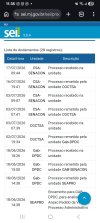
I'm not sending the documents, SirDice. Only those which are authorized may have access. Moreover, I've flagged the petition as private. Though SEI isn't restricted to Brazilian citizens, you'd have no access to the documents.
 

Attachments

  • Screenshot_20260803_113510_Chrome.jpg
    Screenshot_20260803_113510_Chrome.jpg
    270.8 KB · Views: 21
I can see it in ~4 months.

Code:
Outcome: unsuccessful

And to be fair, even if OP did have a case that was missed by decades of expert analysis... the outcome would still be unsuccessful. They would need to go through a solicitor and do things properly.
 
I'm not sending the documents, SirDice. Only those which are authorized may have access. Moreover, I've flagged the petition as private. Though SEI isn't restricted to Brazilian citizens, you'd have no access to the documents.
In other words trust me bro. The likelihood of you having success with this is approximately 0 and I genuinely think you're misunderstanding what you're being told because it seems rather unlikely that nobody in the last few decades has though about this and asked any questions.

Having courts radically reinterpret licenses that have been around for so many decades would cause absolute chaos.
 
Deception may also occur in other forms of conduct associated with a sales transaction.
The entire advertisement, transaction or course of dealing will be considered.
Software licensing is a relatively young legal discipline which is currently undergoing a natural evolutionary cycle. Just as the law adapted to protect consumers during the industrial revolution, this is now adapting to ensure transparency in the digital economy. Applying consumer protection principles to voluntary software license representations doesn't "radically reinterpret" the underlying copyright. The technology market wouldn't collapse if a sovereign state is enforcing truth in consumer transactions.

The BSD license is drafted primarily as a copyright license. The main legal function is to grant permission to perform acts that copyright law would otherwise prohibit. However, software licenses do not exist in a legal vacuum. They accompany commercial products, are reproduced by suppliers, and may become part of the information presented to consumers.

Accordingly, the legal question isn't simply whether the BSD license creates an affirmative obligation to disclose source code under copyright law. Rather, the question is whether the representations contained in the license, once voluntarily adopted and distributed with a consumer product, acquire legal significance under other bodies of law.

Consumer protection law is asking different questions from copyright law. Instead of asking "What permissions has the copyright holder granted?", consumer protection law is asking "What representations were made to consumers?", and "How would the intended audience reasonably understand these representations?".

Copyright is a private property right. Consumer protection law is a matter of public policy and public order. A private copyright permission cannot be used as a legal loophole to escape mandatory statutory obligations of transparency, truth in advertising, and product integrity.
 
A private copyright permission cannot be used as a legal loophole to escape mandatory statutory obligations of transparency, truth in advertising, and product integrity.
Doing exactly what is explicitly permitted by the BSD license is not a loophole. Every developer releasing code under BSD knows that it is a permissive license, and every owner of a PlayStation knows that SONY is a private company, selling proprietary products. So it cannot be a loophole, if SONY is doing the usual things every one expect.

Maybe it can be that in future, for protecting basic rights of consumers, like security, privacy and right to repair, vendors must allow their customers to patch the source code in their products, and they are obliged to release it also in source code form. But this will affect every product, not only products using OSS source code.
 
Software licensing is a relatively young legal discipline which is currently undergoing a natural evolutionary cycle. Just as the law adapted to protect consumers during the industrial revolution, this is now adapting to ensure transparency in the digital economy. Applying consumer protection principles to voluntary software license representations doesn't "radically reinterpret" the underlying copyright. The technology market wouldn't collapse if a sovereign state is enforcing truth in consumer transactions.

The BSD license is drafted primarily as a copyright license. The main legal function is to grant permission to perform acts that copyright law would otherwise prohibit. However, software licenses do not exist in a legal vacuum. They accompany commercial products, are reproduced by suppliers, and may become part of the information presented to consumers.

Accordingly, the legal question isn't simply whether the BSD license creates an affirmative obligation to disclose source code under copyright law. Rather, the question is whether the representations contained in the license, once voluntarily adopted and distributed with a consumer product, acquire legal significance under other bodies of law.

Consumer protection law is asking different questions from copyright law. Instead of asking "What permissions has the copyright holder granted?", consumer protection law is asking "What representations were made to consumers?", and "How would the intended audience reasonably understand these representations?".

Copyright is a private property right. Consumer protection law is a matter of public policy and public order. A private copyright permission cannot be used as a legal loophole to escape mandatory statutory obligations of transparency, truth in advertising, and product integrity.
I really and truly don't think you understand the license you're complaining about. This is all by design and anybody is free to get the code that Sony based their code off of, they just can't have the code that Sony uses for their products that they choose not to release.

This isn't at all complicated this is things working exactly as intended and it's hard for me to comprehend who it is that would want all the source code that doesn't already know this stuff.
 
I believe that the issue is, that the terms of the license need to be translated and described in easier to understand terms. The implications and descriptions of what each straightforward part of the license means. Some don't get it. I didn't always understand GPL either, but I see how it is used, meant to be used, and went along with that. Later, I got it better how permissive and GPL don't necessarily clash, unless it's incorporated under the GPL, and the BSD licensed software itself isn't deprived: it's only affected when used in conjunction with GPL.
 
I believe that the issue is, that the terms of the license need to be translated and described in easier to understand terms. The implications and descriptions of what each straightforward part of the license means.
Translation to which language? The terms are absolutely clear what you can and cannot do. In AI era you can get explanation for details, if not sure is it really what you have read.
 
The topic starter here is trying to eek an obligation to redistribute out of a license that does not contain one. I've seen a lot of licenses on software. Not many stipulate where you're supposed to get the software itself from at all. The place for that is in a purchase or similar agreement where a copy of a bunch of bits changes hands in exchange for something else.The license spells out your rights assuming you possess a copy of the software already. The GPL is one of the notable exceptions that put an obligation on the entity that provides you with binaries. It needs to be extremely explicit about those terms though, because in no jurisdiction are they implied and they are very VERY much the exception to the rule.
 
Translation to which language? The terms are absolutely clear what you can and cannot do. In AI era you can get explanation for details, if not sure is it really what you have read.
translated and described in easier to understand terms.
Into easier to understand terms.

This is obviously for the one who started this thread, who needs these simplified in an easier to understand form of English: if you want to get technical, perhaps "Simplied English". If you've gotten the gist of this thread, how he keeps saying something is wrong with BSD licenses, when there's not. It must be a misunderstanding error on his part, which is where this is needed.

AI can hallucinate, so it needs to be a standard in depth explanation for those who don't understand, whether or not AI assisted.
 
Into easier to understand terms.

This is obviously for the one who started this thread, who needs these simplified in an easier to understand form of English: if you want to get technical, perhaps "Simplied English". If you've gotten the gist of this thread, how he keeps saying something is wrong with BSD licenses, when there's not. It must be a misunderstanding error on his part, which is where this is needed.

AI can hallucinate, so it needs to be a standard in depth explanation for those who don't understand, whether or not AI assisted.
I suppose, but the people who can actually read, understand and use the code are going to understand what the licensing means. If you can't read, understand or use the code anyways, then having or not having the code isn't at all relevant in the consideration of whether or not to make a purchasing decision in the first place.
 
Translation to which language? The terms are absolutely clear what you can and cannot do. In AI era you can get explanation for details, if not sure is it really what you have read.
For OP and OP's lawers, maybe to Portguese, with "assured to be legally 100% equivalent with original English one by US and Brazilian highest courts".
 
What if one doesn't wish or cannot obtain the sources from the copyright holder, hedwards? This is something. And the license doesn't require one to describe the exact version in use. Even then, what if the copyright holder does no longer have the sources? The supplier is a licensee, as is the consumer. However, the supplier is responsible for whatever they place in the market. The supplier voluntarily chose to reproduce/retain the license. The supplier isn't exempted from responsibility.

Take the SoC manufacturer analogy, again. Motorola incorporated a SoC from a manufacturer. The SoC presented a failure. Consumers don't call the manufacturer, but the marketer of the product. Motorola voluntarily chose to incorporate the SoC in the product, and place in the market. Motorola cannot transfer or be exempted from responsibility.

The fact the copyright holder authored the text doesn't mean the supplier is immune from consumer protection law. The supplier should respond for whatever they place in the market.

The confusion is due to how copyright law and consumer protection law address different legal interests. Copyright law shall define the permissions and conditions governing the use of copyrighted works. Consumer protection law shall evaluate whether representations accompanying products are deceptive or unfair to consumers. The same BSD license may be analyzed under copyright law for the legal permissions, and, if reproduced/retained as part of a commercial transaction, under consumer protection law for the conveying representations.
 
What if one doesn't wish or cannot obtain the sources from the copyright holder, hedwards? This is something. And the license doesn't require one to describe the exact version in use. Even then, what if the copyright holder does no longer have the sources? The supplier is a licensee, as is the consumer. However, the supplier is responsible for whatever they place in the market. The supplier voluntarily chose to reproduce/retain the license. The supplier isn't exempted from responsibility.

Take the SoC manufacturer analogy, again. Motorola incorporated a SoC from a manufacturer. The SoC presented a failure. Consumers don't call the manufacturer, but the marketer of the product. Motorola voluntarily chose to incorporate the SoC in the product, and place in the market. Motorola cannot transfer or be exempted from responsibility.

The fact the copyright holder authored the text doesn't mean the supplier is immune from consumer protection law. The supplier should respond for whatever they place in the market.

The confusion is due to how copyright law and consumer protection law address different legal interests. Copyright law shall define the permissions and conditions governing the use of copyrighted works. Consumer protection law shall evaluate whether representations accompanying products are deceptive or unfair to consumers. The same BSD license may be analyzed under copyright law for the legal permissions, and, if reproduced/retained as part of a commercial transaction, under consumer protection law for the conveying representations.
You'd get it from wherever they got them from, and if that source doesn't want to share the source they don't have to either. This is a permissive license, it's not like God on high has handed down this code so that we all have it.

All of this is an extreme reach. The availability, or lack thereof, of the source is going to be known at the time of the purchase and barring a company promising to provide it all at a later time, there's simply no basis for the company being required to provide all of the source.

You keep referencing consumer rights that just do not exist in any part of the world that I'm aware of. And with good reason, if companies had to provide the source for everything it would lead to significant issues in terms of trying to maintain trade secrets. Smaller less wealthy countries would probably be skipped completely to do business in countries where they can make decisions without having to share crucial code. It's hard enough for the 3d printer manufacturers that have open source components to stay in business as it is without having to share code they're not contractually obligated to share.
 
Why do you not share the full paper trail of your crusade here?
Yes, that might shed a bit of a light on it, but none of this adds up in terms of any action being taken beyond the formal acceptance of the information and a quick looksy. I just don't see anything in any of this that could reasonably lead to any sort of customer protection action being taken without radically redefining what the plain text of the license means.
 
Back
Top